comparing fractions Worksheets
Our comparing fractions worksheets help 3rd and 4th grade students master fraction comparison through visual and numerical methods. Students practice comparing fractions with same or different denominators, ordering fractions from least to greatest, and determining relationships to benchmark fractions like one-half.
×
About these worksheets
These worksheets develop fraction comparison skills using multiple strategies. Students compare fractions with same numerators or denominators, compare fractions with different denominators using common denominators, determine whether fractions are greater than, less than, or equal to one-half, order sets of fractions, and use visual models for comparison. Resources span third through fourth grade.
3nf3d
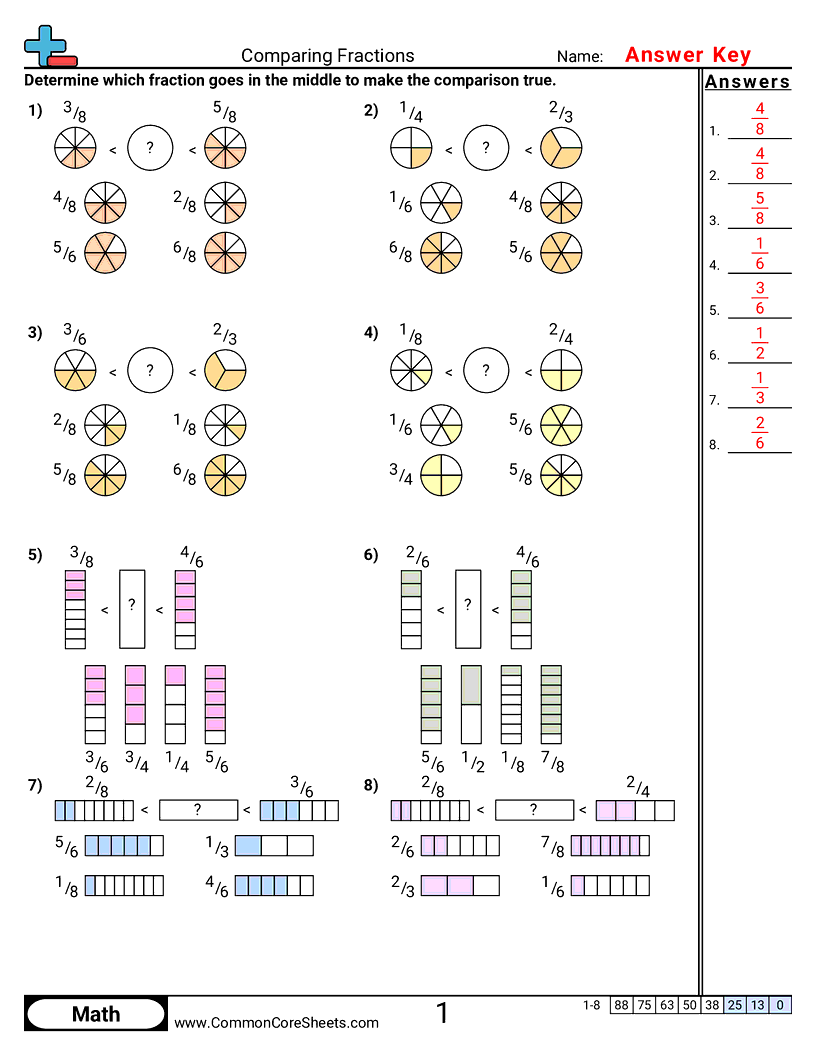
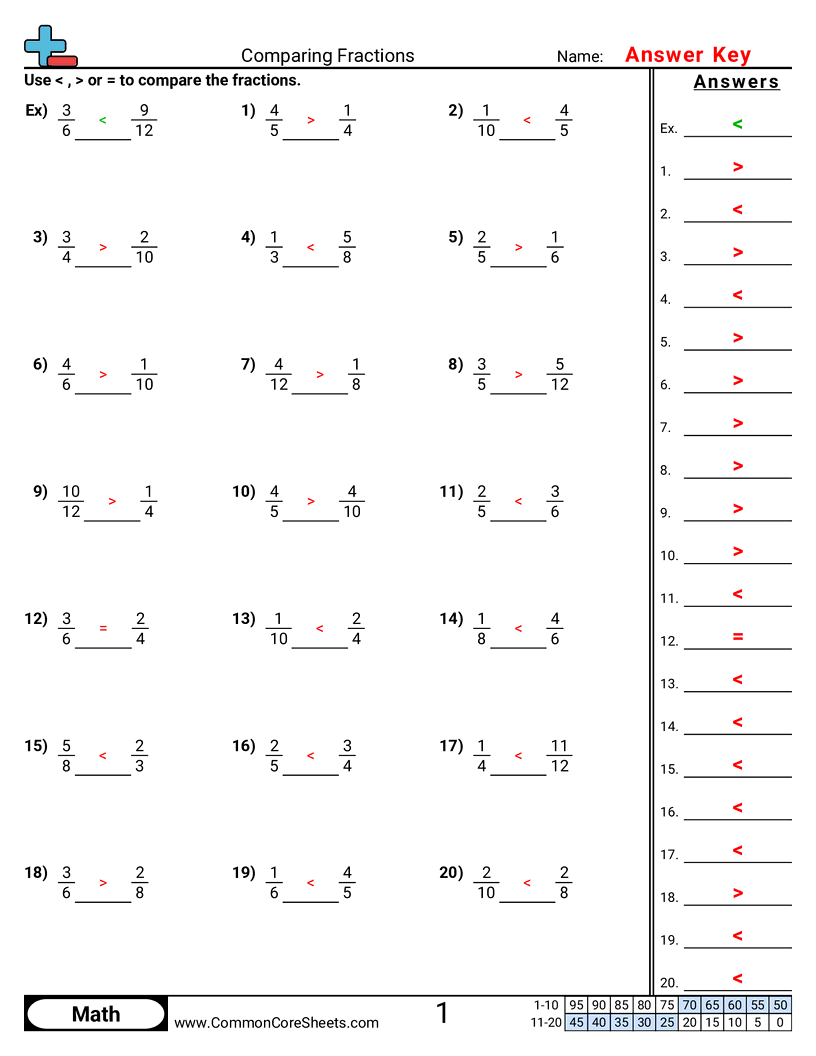
Compare two fractions and decide which one is greater, less, or if they are equal. Fill in the missing fraction to make a comparison statement true. Use fraction models or number lines to compare fractions by their size. Compare fractions with different denominators by thinking about equivalent fractions or common denominators.
3nf1
Match a shaded picture or model to the fraction it shows. Count equal parts to figure out the denominator and count shaded parts to figure out the numerator. Recognize the same fraction shown with different shapes or layouts (like bars, circles, or grids).
3nf3d
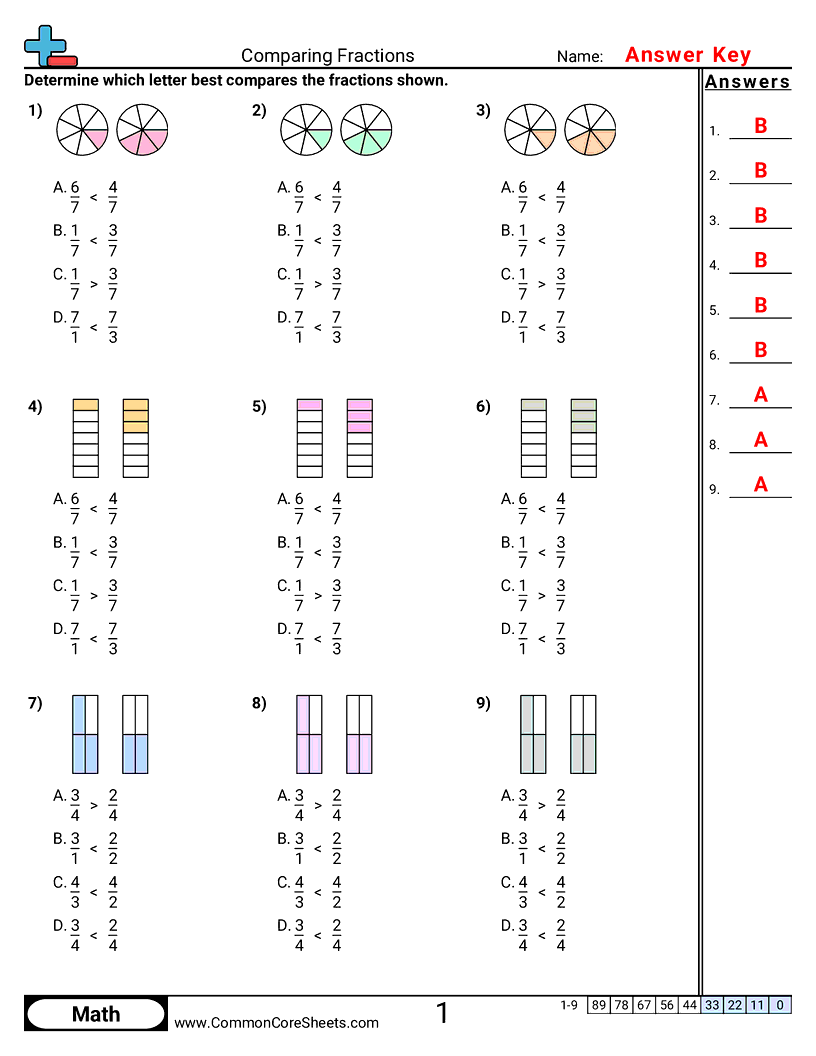
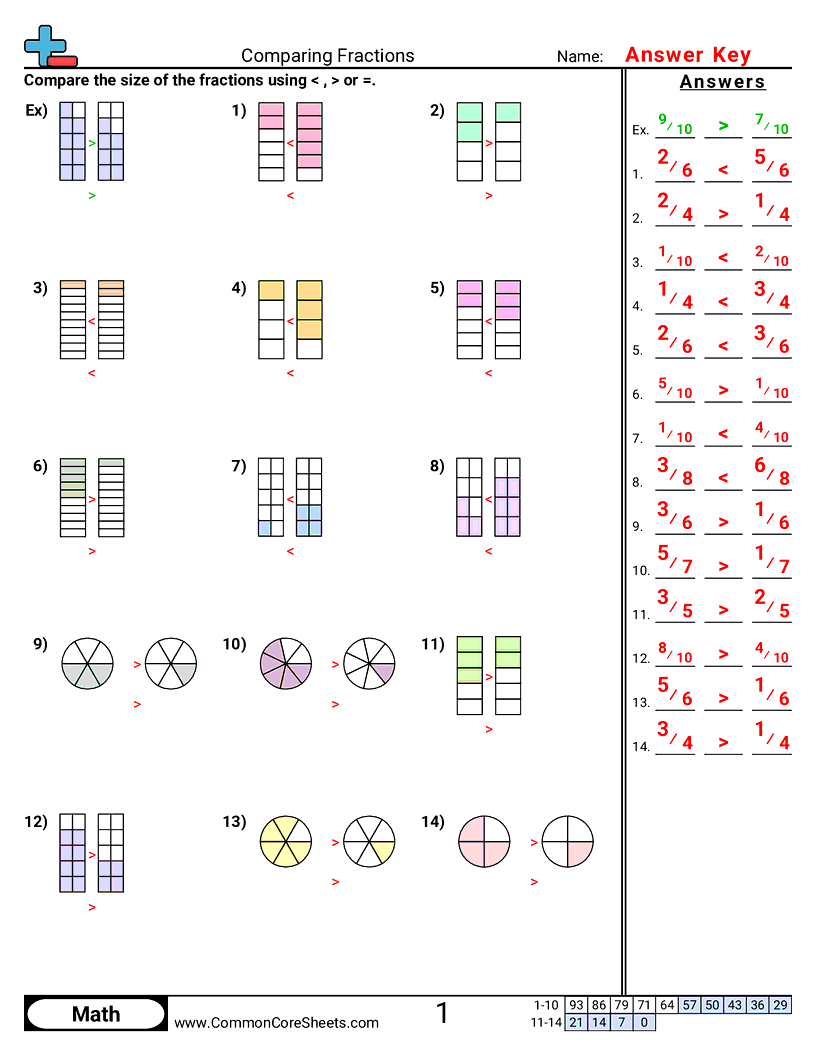
Decide which of two fractions is greater, less, or if they are equal. Use fraction pictures or models to compare the size of two fractions. Identify the numeric value of a visual fraction model. Count equal parts to figure out the denominator and count shaded parts to figure out the numerator.
3nf3d
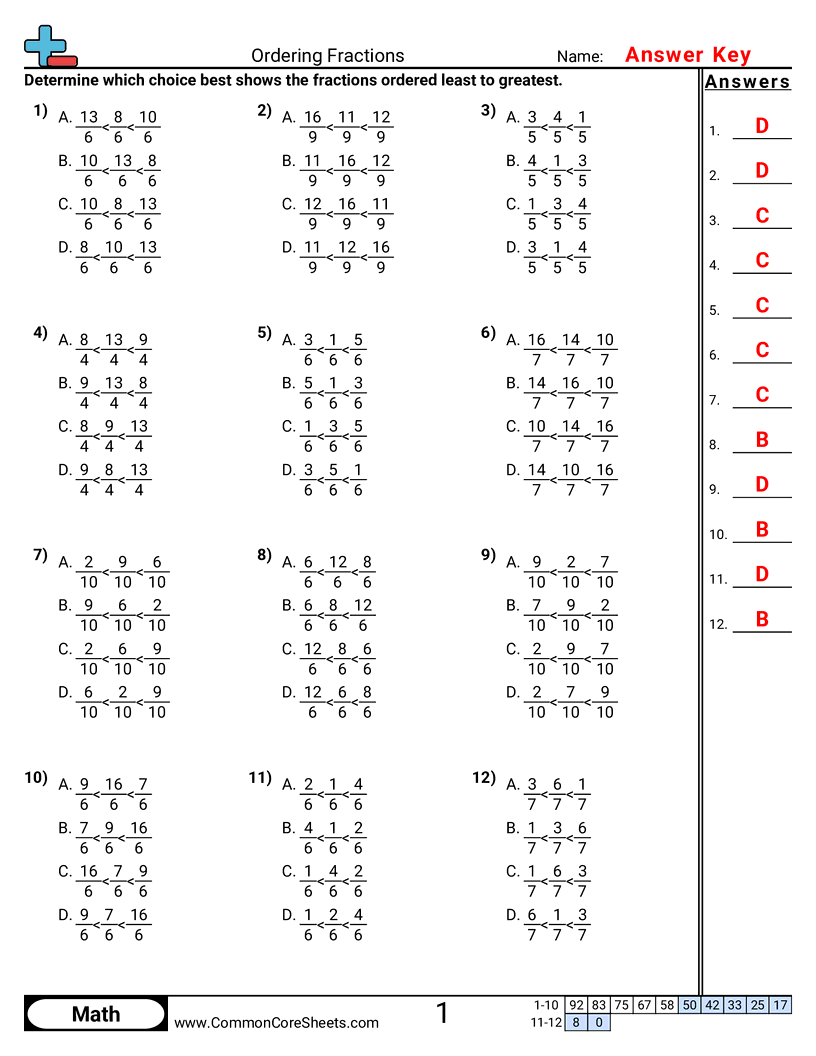
Put a set of fractions in order from least to greatest. Compare two fractions to decide which one is larger or smaller. Use benchmark fractions like 0, 1/2, and 1 to judge fraction size.
3nf3d
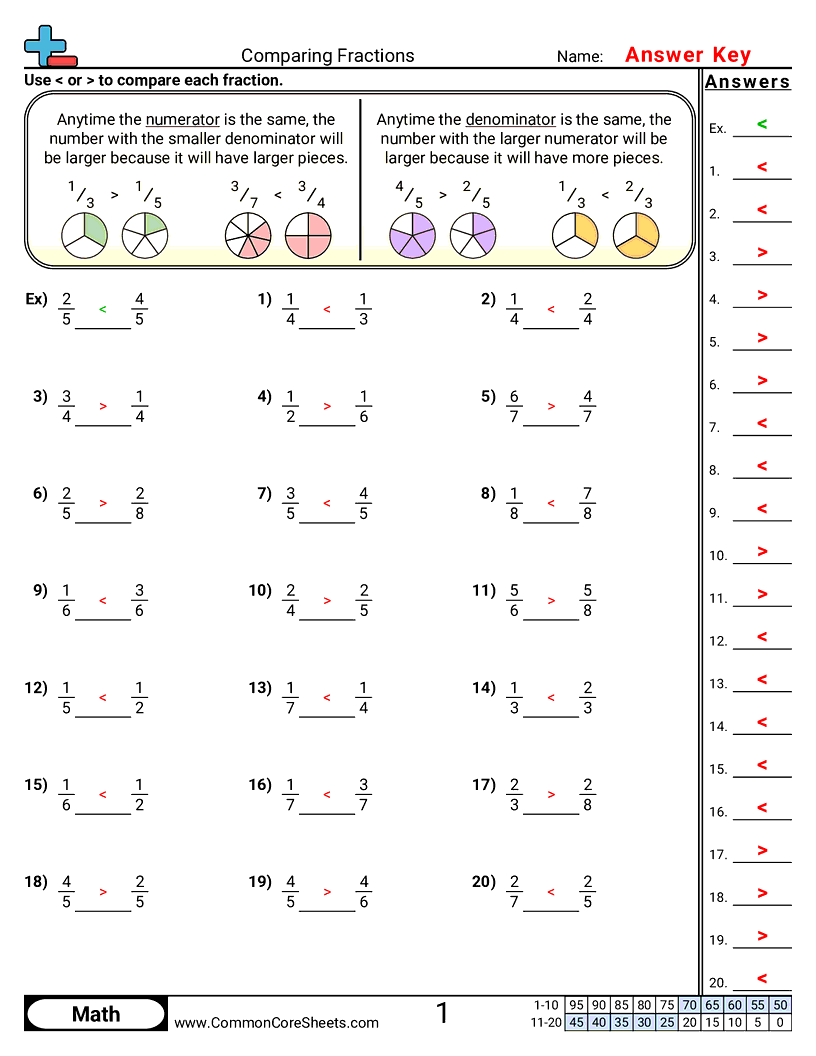
Compare two fractions when the denominators are the same by looking at which numerator is bigger. Compare two fractions when the numerators are the same by deciding which denominator makes bigger pieces. Use the symbols >, <, and = to show which fraction is larger, smaller, or if they are equal.
Decide which of two fractions is greater, less, or if they are equal by looking at pictures or models.
4nf2
Compare two fractions that have different denominators and decide which one is greater or less. Use equivalent fractions (common denominators) to make unlike fractions easier to compare.
4nf2
Decide whether a fraction is less than, equal to, or greater than one half. Use the numerator and denominator to tell if a fraction is exactly one half (evenly divisible). Compare fractions to the benchmark fraction 1/2 without converting to decimals. Recognize equivalent fractions that are equal to 1/2 (like 2/4 or 5/10).
4nf3d
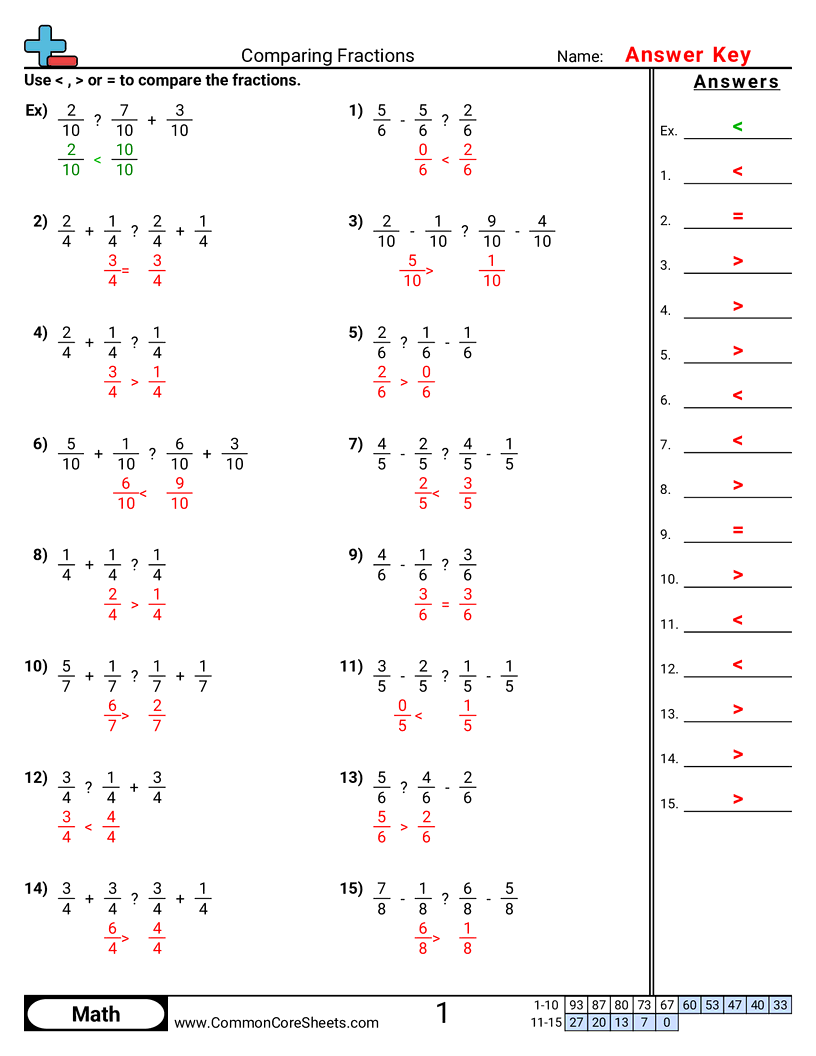
Add and subtract fractions to find a sum or difference. Compare two fraction results to decide which is greater, less, or equal. Use common denominators or equivalent fractions to make comparisons easier.
4nf2
Decide whether a shaded fraction is less than, equal to, or greater than one-half. Compare a fraction to 1/2 by thinking about how many equal parts make a whole. Use pictures like fraction models or number lines to judge a fraction’s size compared to 1/2.
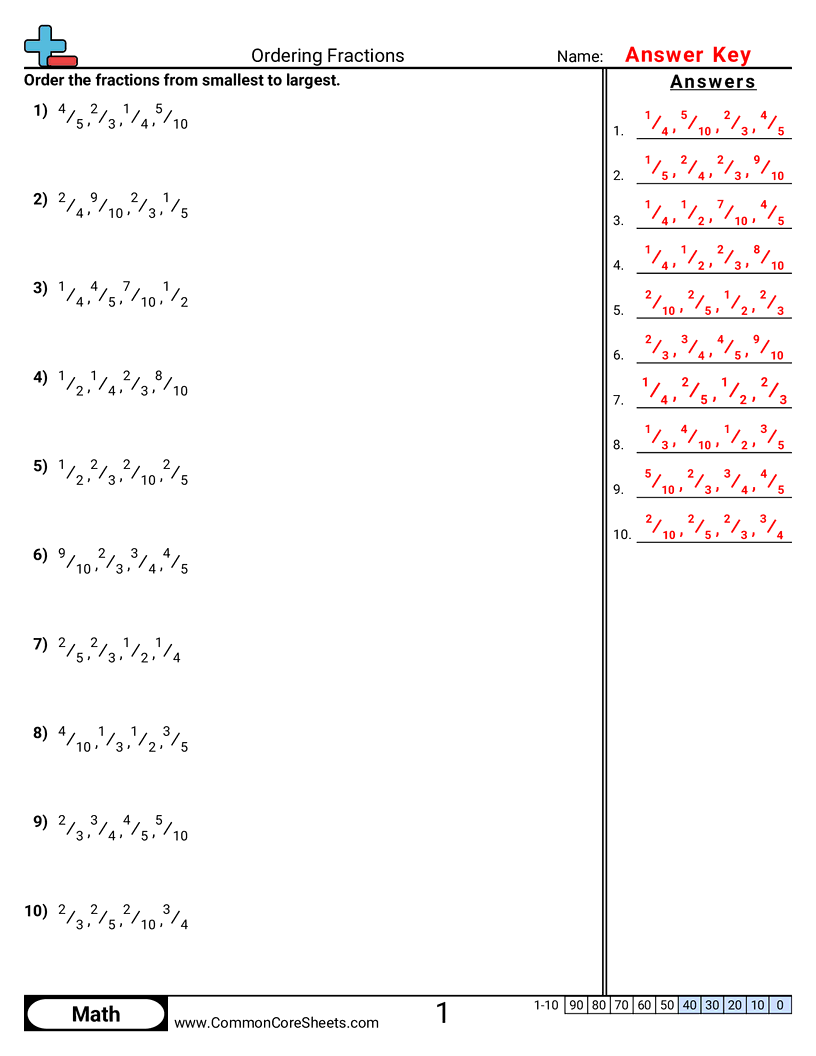
Put fractions in order from least to greatest. Compare fractions that have different denominators like 2, 3, 4, 5, and 10. Use equivalent fractions to make fair comparisons (like changing 1/2 into 5/10). Decide which fraction is bigger or smaller by thinking about the size of the pieces.
Playwire Advertisement