Ratio Worksheets
Free ratio worksheets with answer key. No login or account needed. From visual ratio problems to word problems and even ratio charts and graphs, we've got you covered. A grading column and quick grade scale maker grading a breeze and a modified pages help with lower level learners or when just introducing a topic. Great for teachers or for homeschool.
×
About these worksheets
These worksheets provide comprehensive practice with ratios and proportional reasoning. Activities include finding ratios from visual models, interpreting ratio wording, using rate language, reducing ratios, solving ratio word problems, using double number lines, writing equations from ratios, creating equivalent ratios, determining proportionality from tables, and evaluating true and false ratio statements. Resources span sixth through seventh grade Common Core standards.
6rp1
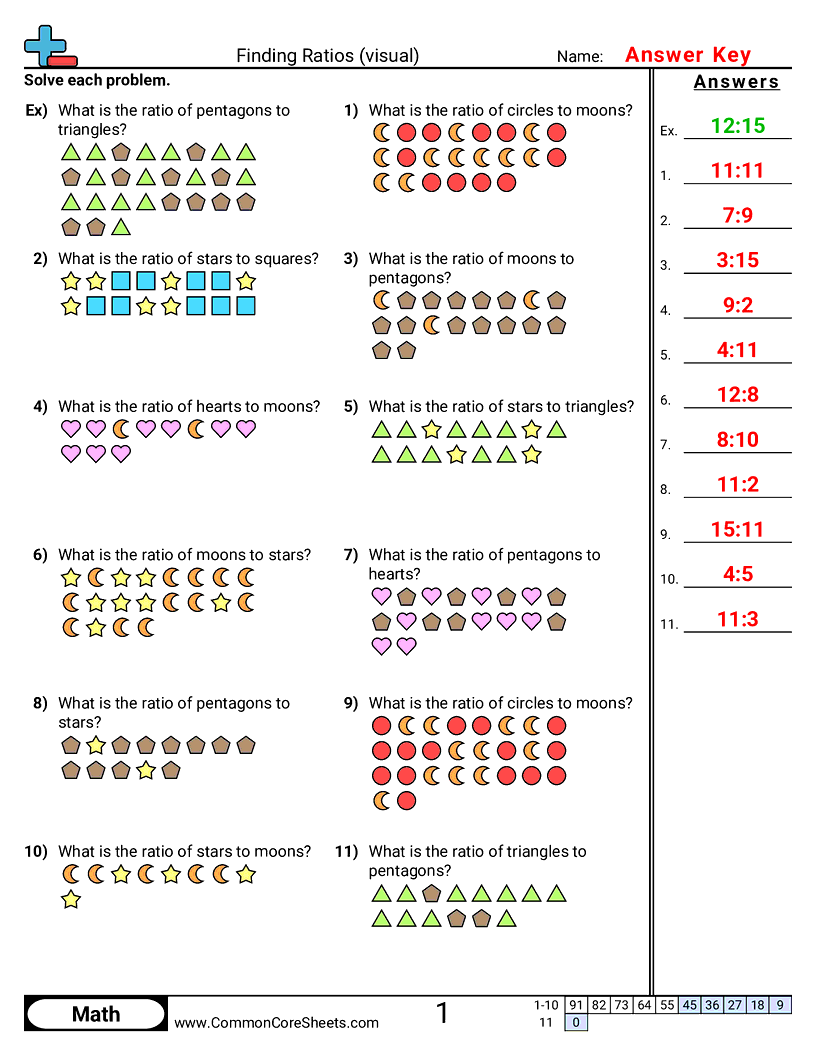
Count each type of shape in a picture and compare the groups. Write ratios to show how many of one shape there are compared to another shape.
6rp1
Practice turning ratio phrases into a clear ratio using numbers (like 3 to 2 or 3:2). Learn to tell which quantity is being compared to which by reading the order of the words. Work with different ways ratios are written, like “for every,” “per,” “each,” and “out of.” Decide whether a statement is comparing part-to-part or part-to-whole.
6rp2
Learn what rate words like per, each, and every mean in a problem. Match a rate statement to the correct ratio (like 3 apples for every 2 oranges).
6rp3c
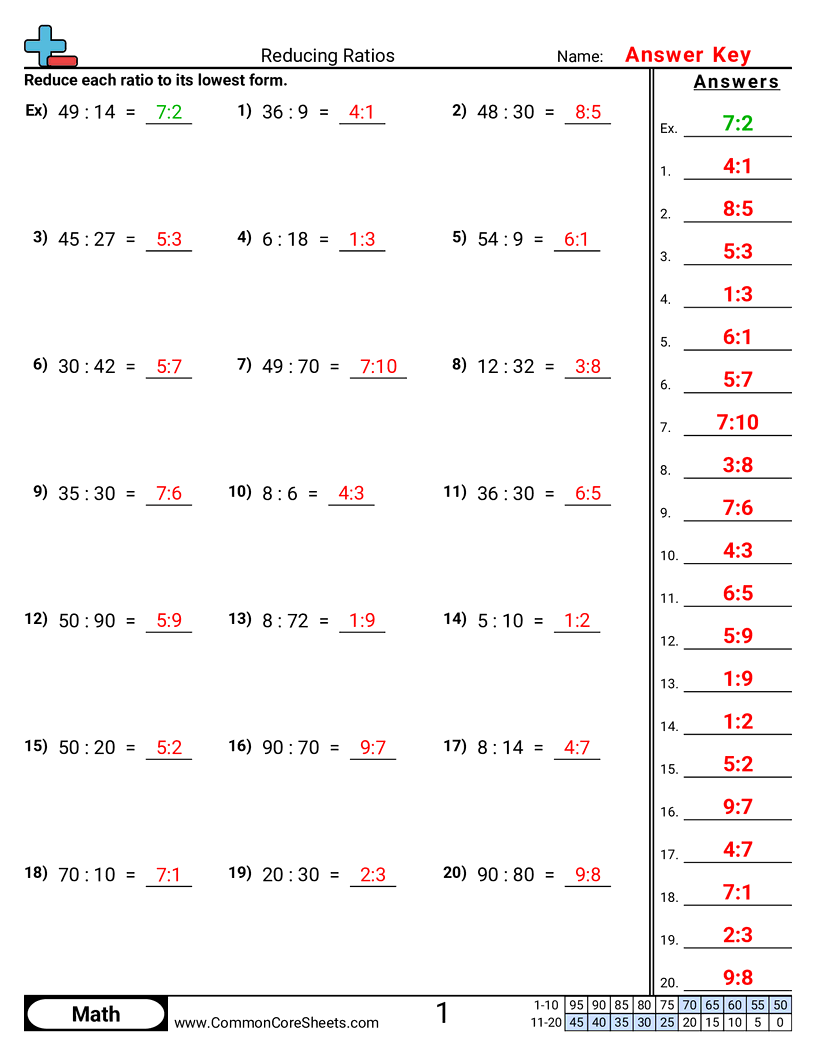
Practice simplifying a ratio by dividing both numbers by the same factor. Find the greatest common factor of two numbers to reduce a ratio all the way. Check that a reduced ratio is correct by scaling it back up to match the original.
6rp3c
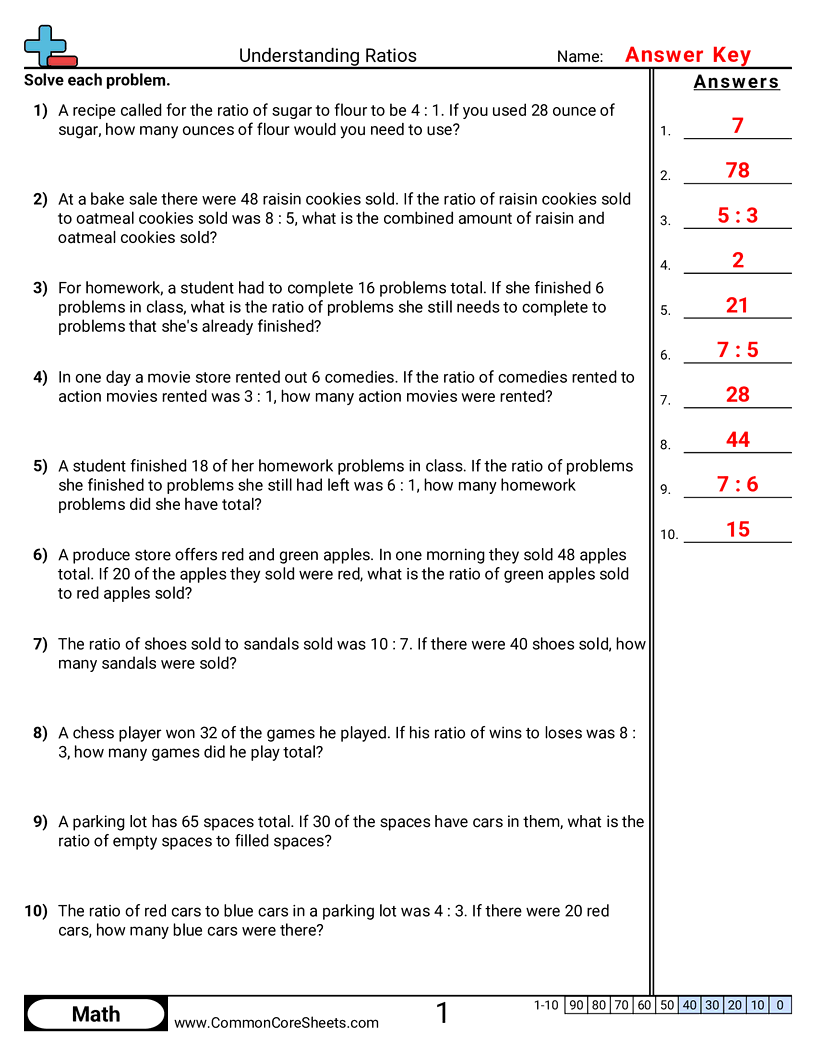
Find and write ratios from a word problem by comparing two amounts. Use a given ratio to figure out a missing part when you know the other part. Use a given ratio to find the total when you know one part of the ratio. Explain what a ratio means in context using clear words like “for every” or “per.”
6rp3b
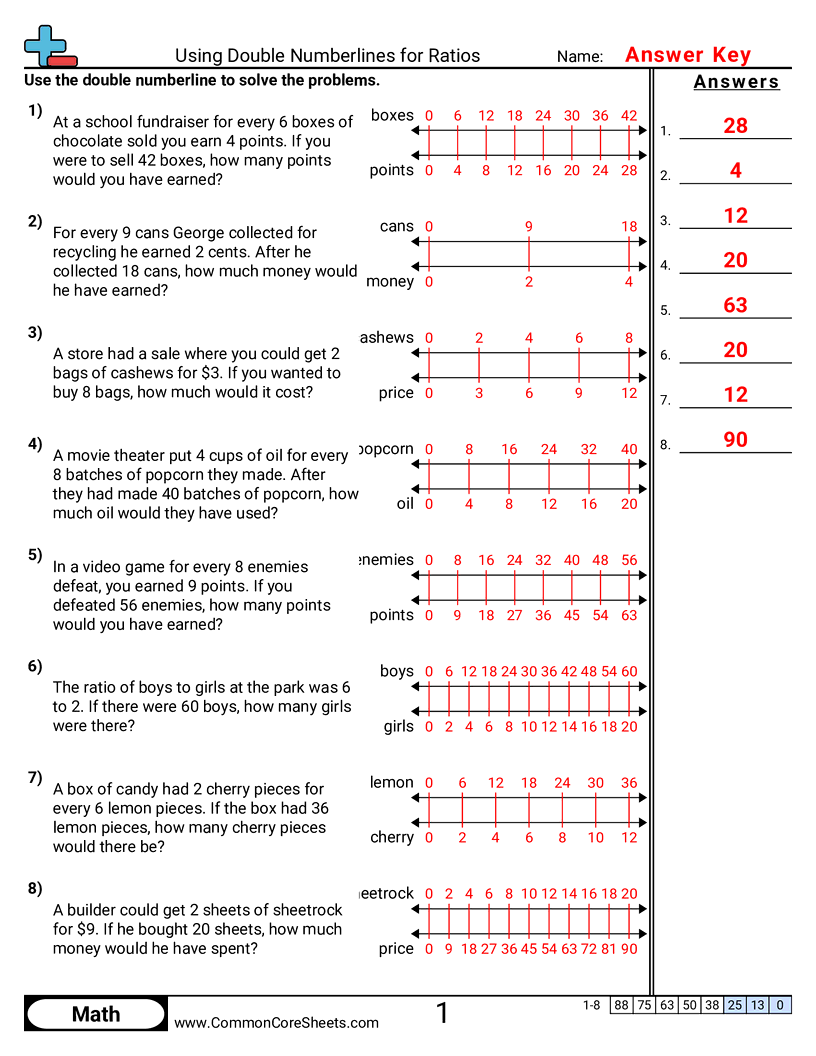
Read a double number line to see how two quantities match up in a ratio. Find missing values by scaling both sides of a ratio up or down on the number lines. Find and use a unit rate (like per 1) from a double number line to answer questions.
6rp3d
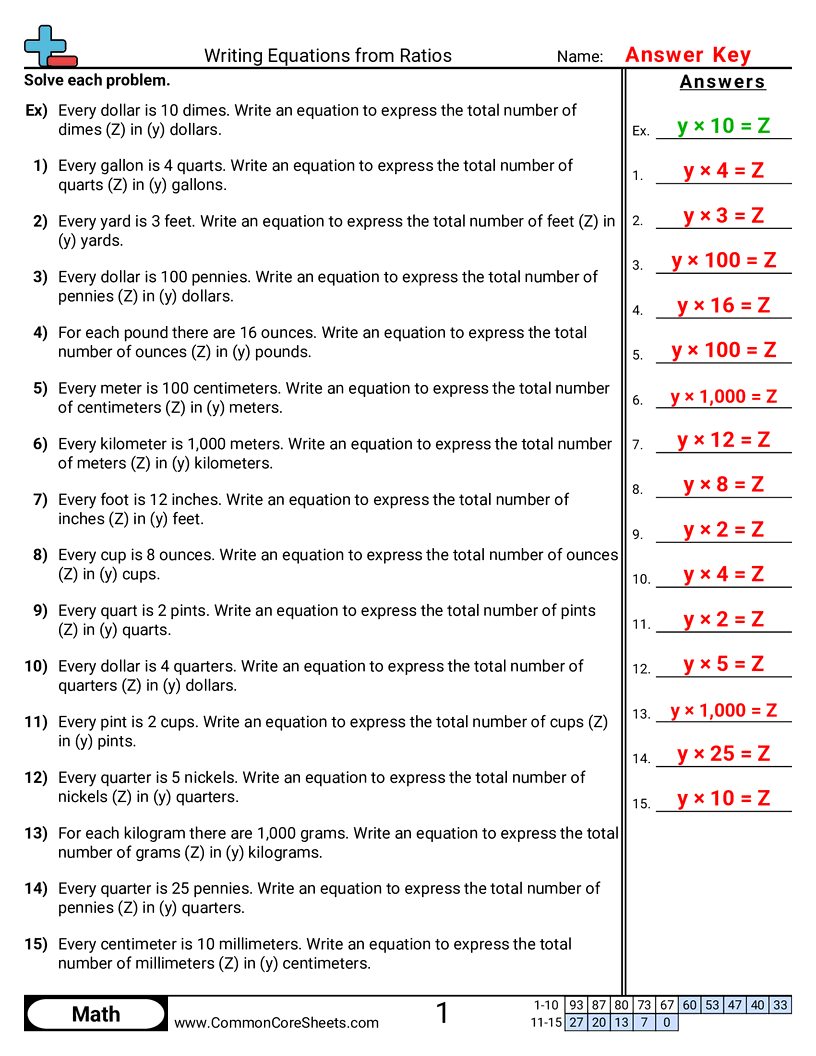
Turn a ratio between two measurements into an equation with a variable. Use a given unit rate to write an equation that connects two quantities. Match each part of a ratio to the correct variable so the equation represents the situation.
6rp3d
Use a ratio equation to find a missing value in a pair of equivalent ratios. Set up a proportion from a word problem by matching the units correctly. Solve for a variable in a ratio equation using multiplication and division.
7rp2a
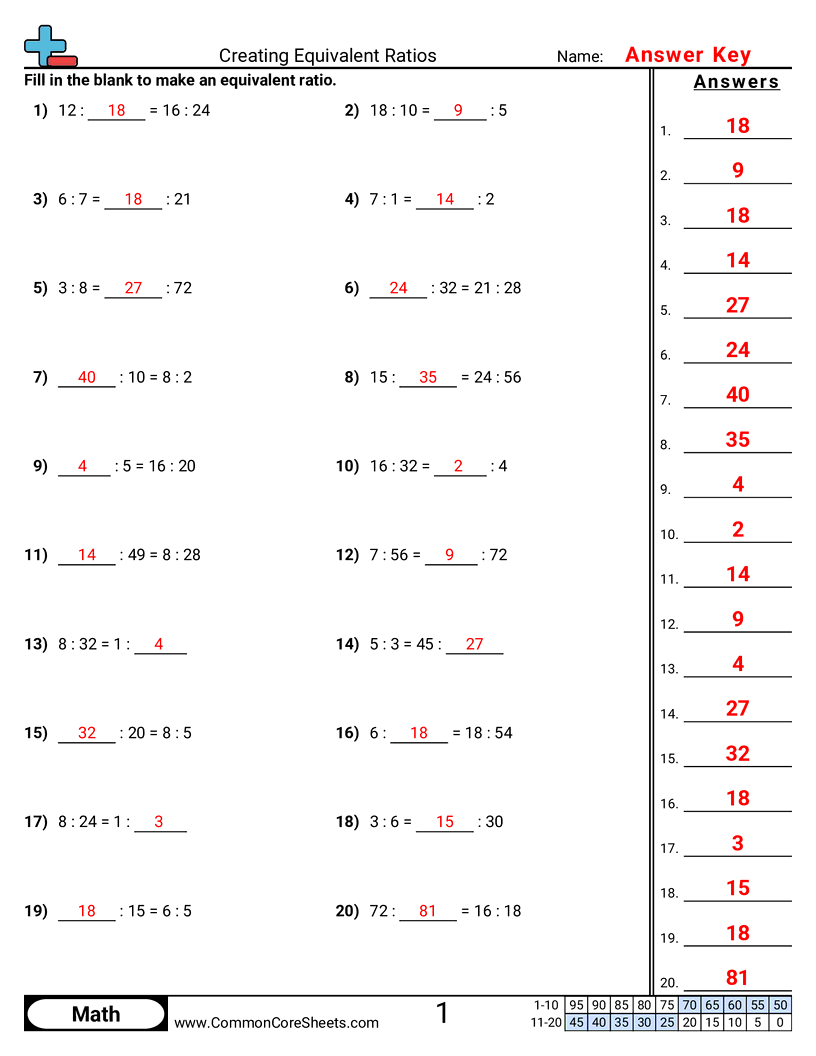
Fill in a missing number to make two ratios equivalent. Scale a ratio up or down by multiplying or dividing both parts by the same number. Recognize when two ratios compare quantities in the same way, even if the numbers look different. Use equivalent ratios to keep a constant rate when you change the size of a group or amount.
7rp2a
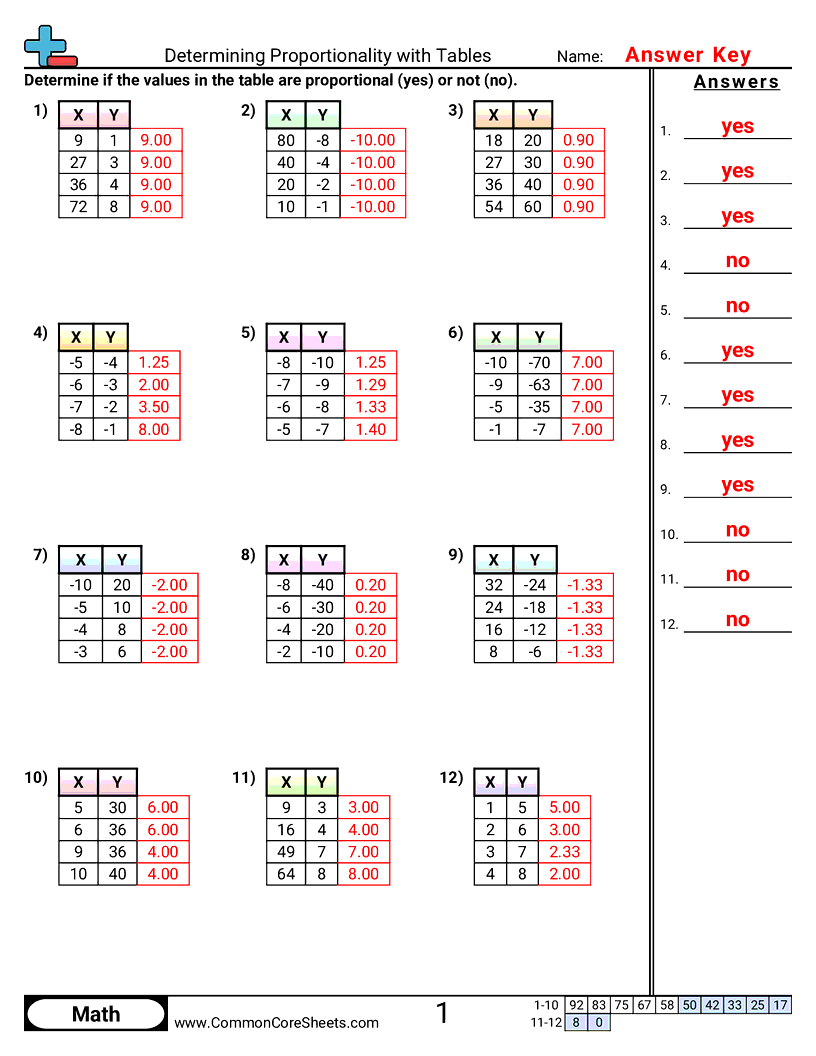
Decide whether two columns in a table show a proportional relationship. Find the constant of proportionality by comparing each pair of values in the table. Use unit rate to check if the ratio stays the same across the table. Spot when a table is not proportional because the ratios change from row to row.
6rp1
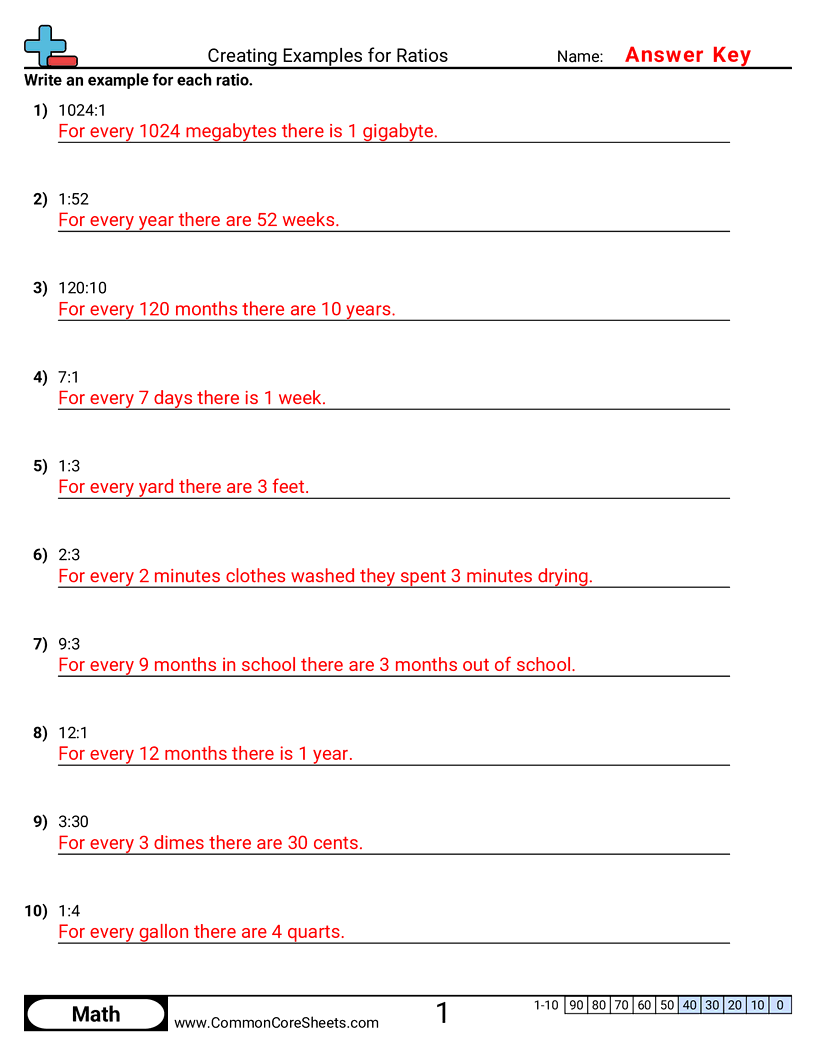
Practice writing a ratio to compare two amounts in a clear way. Decide which number in a ratio matches each part of a situation (like red to blue or boys to girls). Create a simple word scenario that matches a given ratio.
6rp1
Use unit rates to compare ratios and confirm whether a statement matches the situation.
About these worksheets
Students develop rate and proportional reasoning skills through real-world applications. Worksheets cover unit prices, finding ratios and unit rates, working with unit fractions, understanding unit rates with fractions, identifying the constant of proportionality from tables and graphs, using the y = kx formula, explaining proportional variables, and creating tables and graphs from ratio scenarios. Aligned with sixth and seventh grade standards.
6rp3b
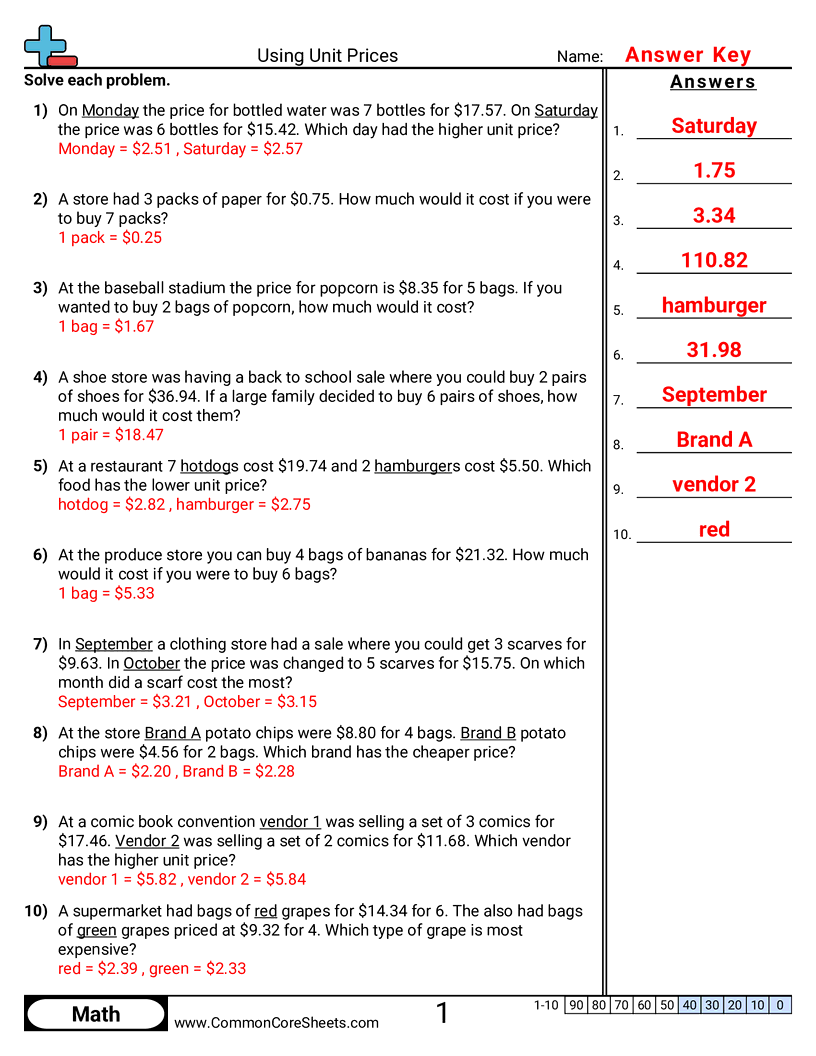
Find the cost for 1 item when you’re given a total cost for several items. Use a unit price (cost per 1) to figure out the cost for a different number of items. Compare two deals by finding the unit price and choosing the better buy. Work with money amounts written as decimals when solving shopping word problems.
6rp3b
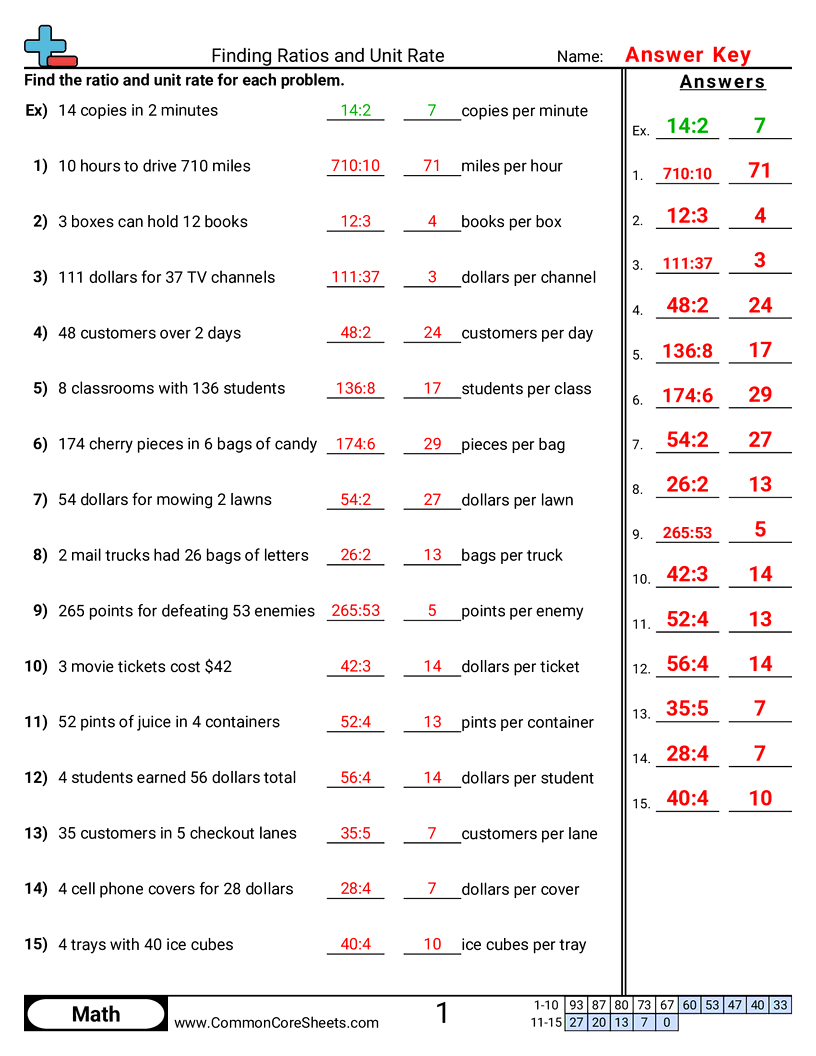
Find and write a ratio to compare two amounts in a situation. Use division to find a unit rate, like cost per item or miles per hour.
7rp1
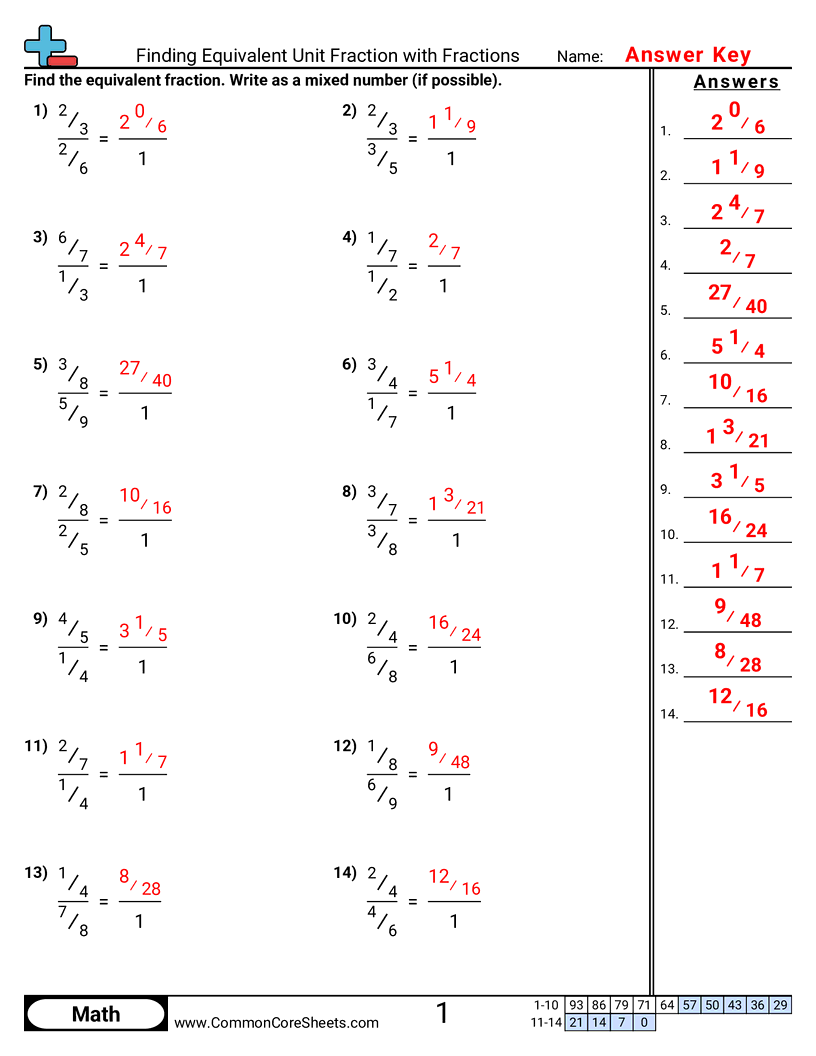
Find a unit fraction that is equivalent to a given fraction. Use multiplication or division to scale the numerator and denominator by the same number. Compare two fractions to confirm they represent the same amount.
7rp1
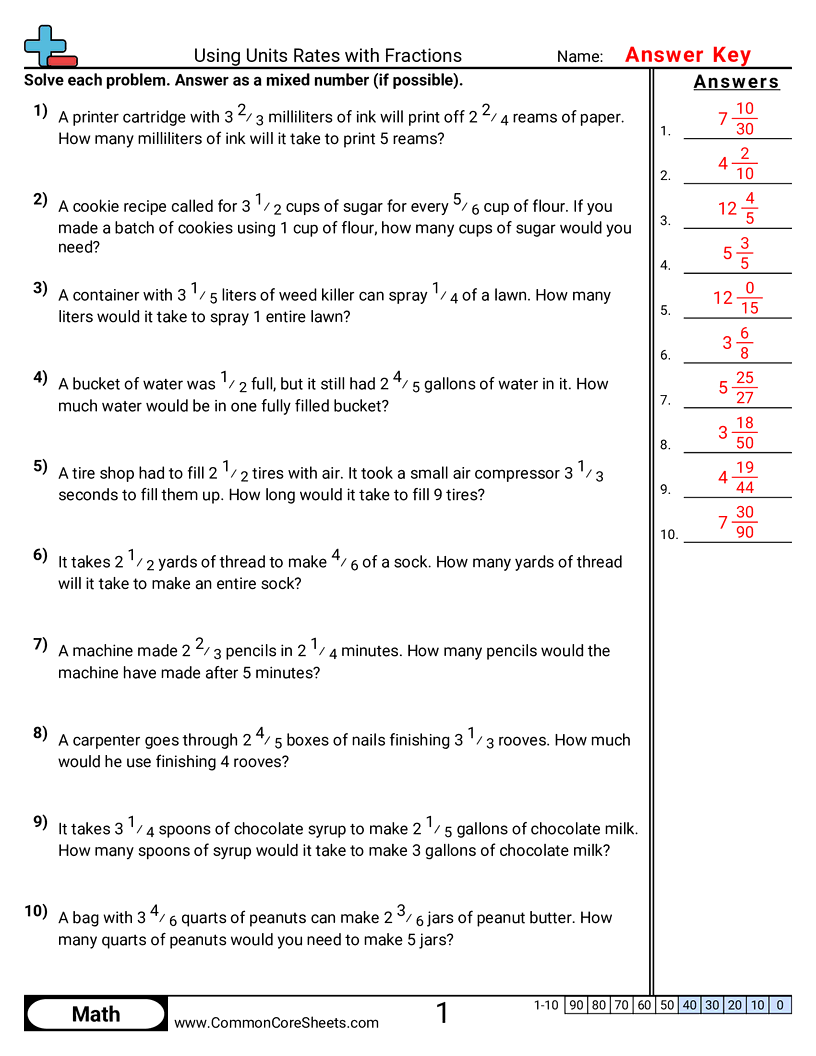
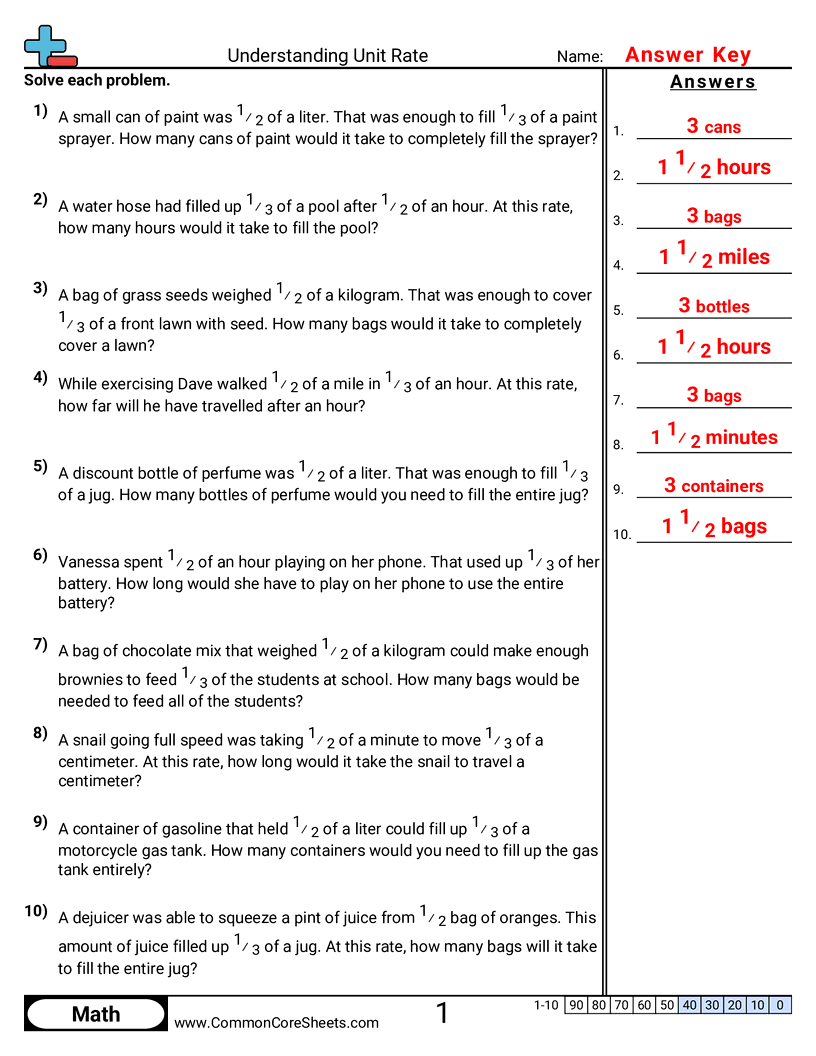
Find a unit rate when the numbers are fractions, like how much for 1 cup or 1 mile. Divide fractions to figure out “per 1” amounts and compare rates. Use unit rates to decide which option is a better deal or a better speed.
7rp1
Find the unit rate by figuring out the amount for 1 item, 1 hour, or 1 mile. Use unit rates to compare two deals or situations and decide which is better.
7rp2b
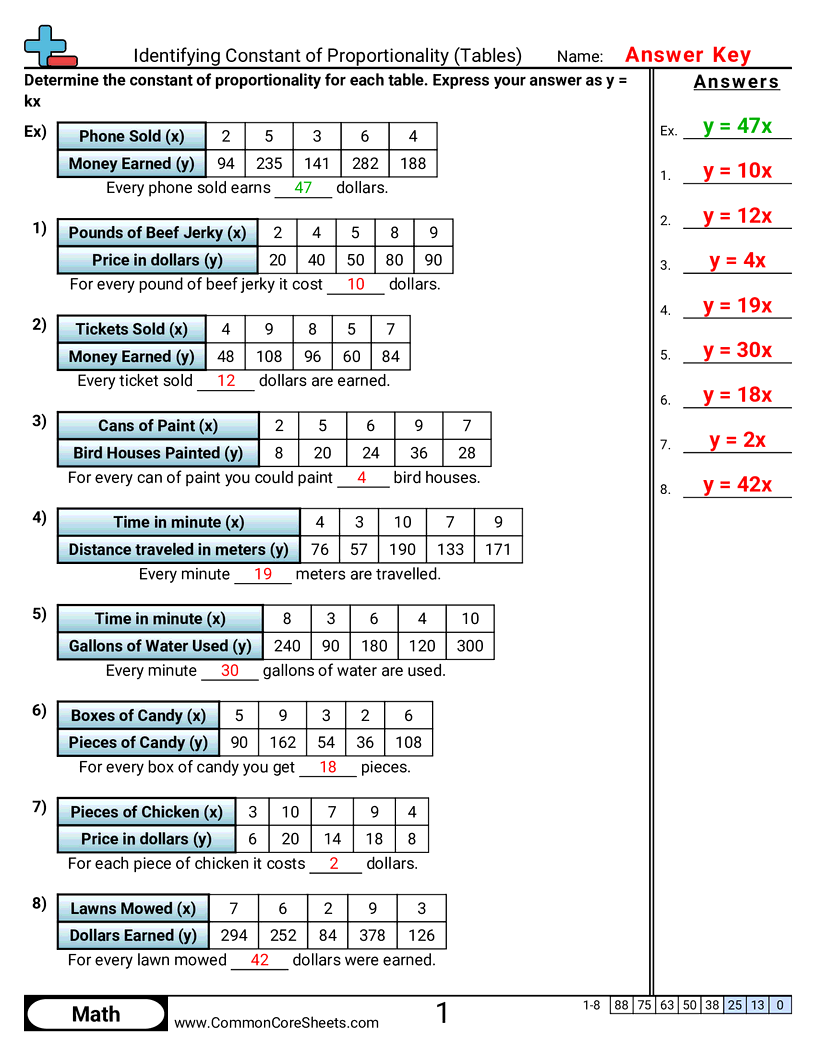
Find the constant of proportionality (k) by comparing the two columns in a table. Use division to figure out the unit rate from a table of equivalent ratios.
7rp2b
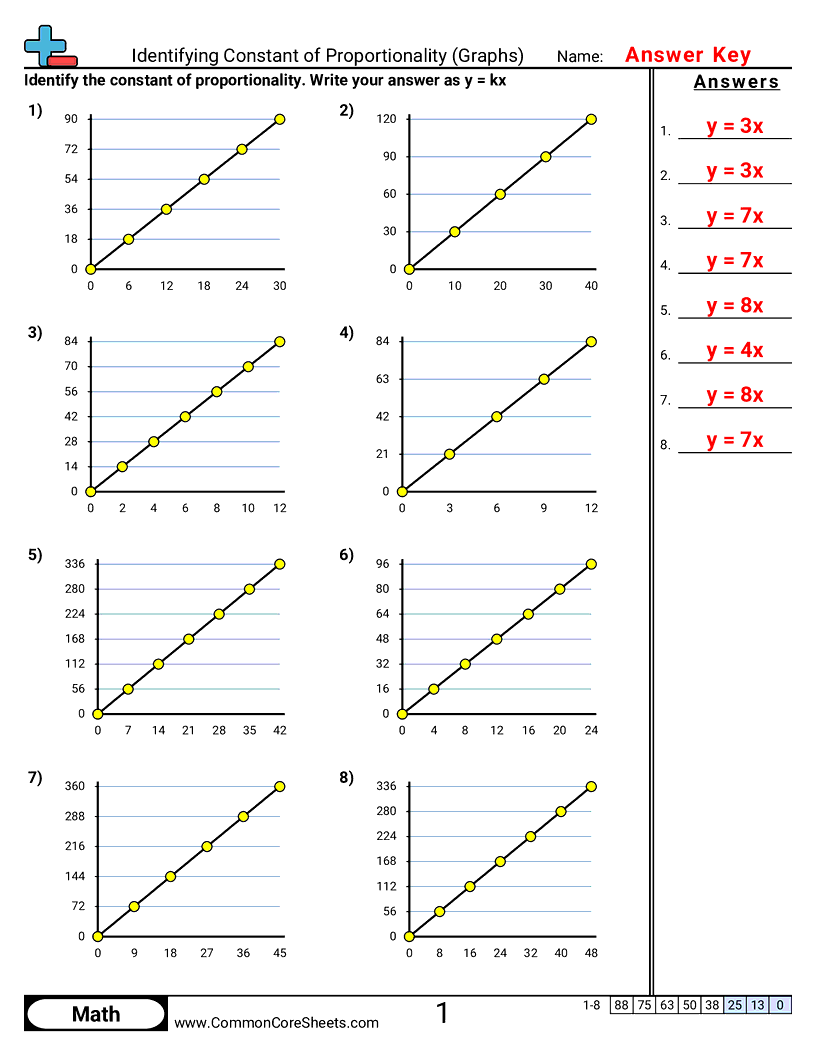
Find the constant of proportionality (k) from a graph by comparing y to x.
7rp2b
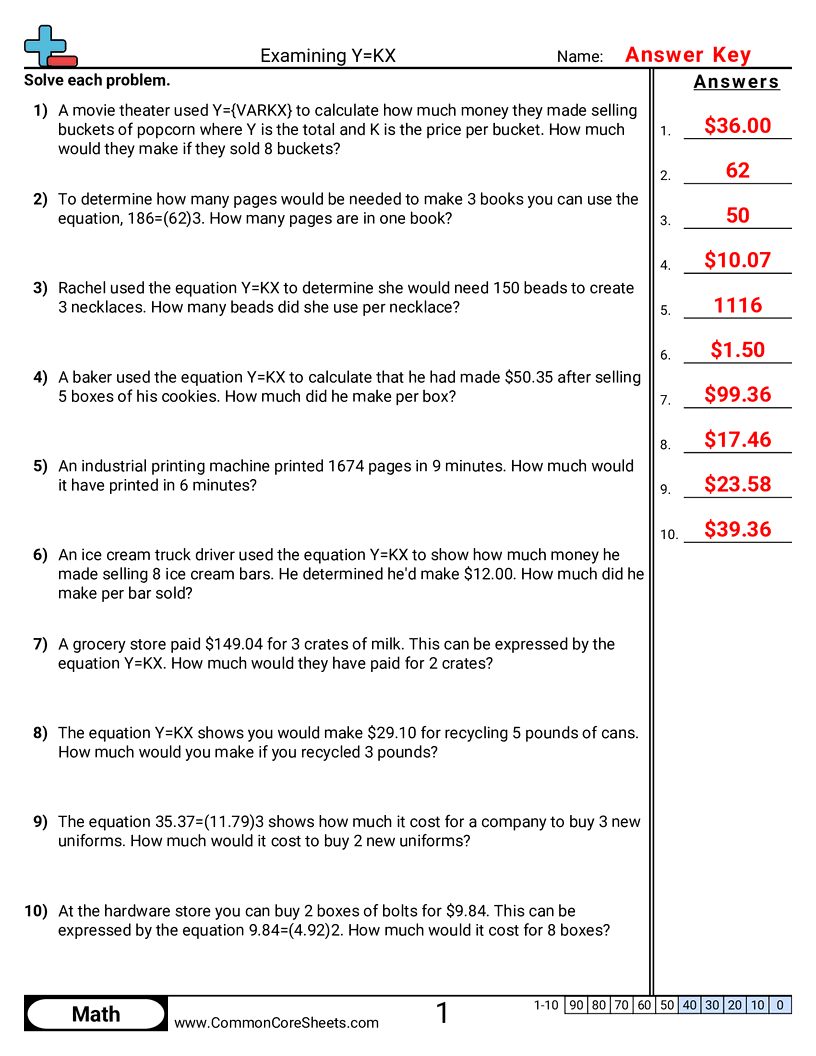
Use the rule y = kx to find a missing value when you know the constant rate and one other value. Figure out what k means in a word problem (the amount per 1) and use it to solve. Decide whether a situation is proportional and can be modeled by y = kx.
7rp2d
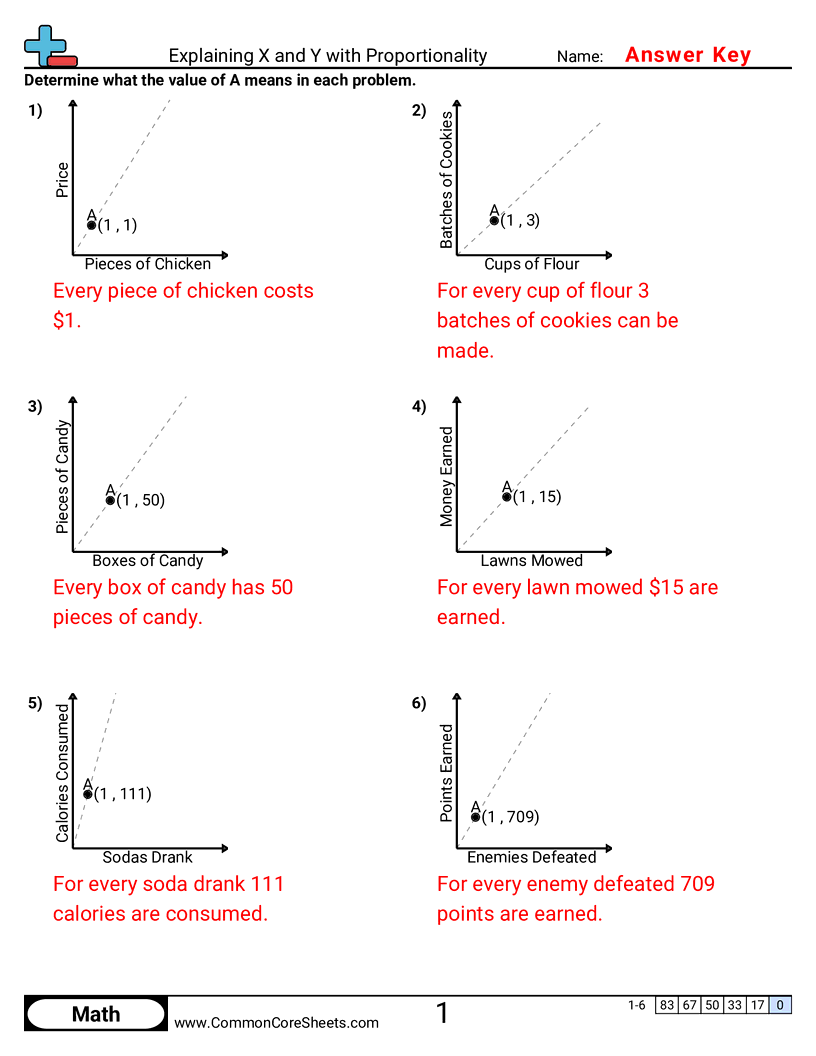
Find the constant of proportionality (unit rate) from a table, graph, or equation. Explain what x and y represent in a proportional situation using words and ratios.
6rp3a
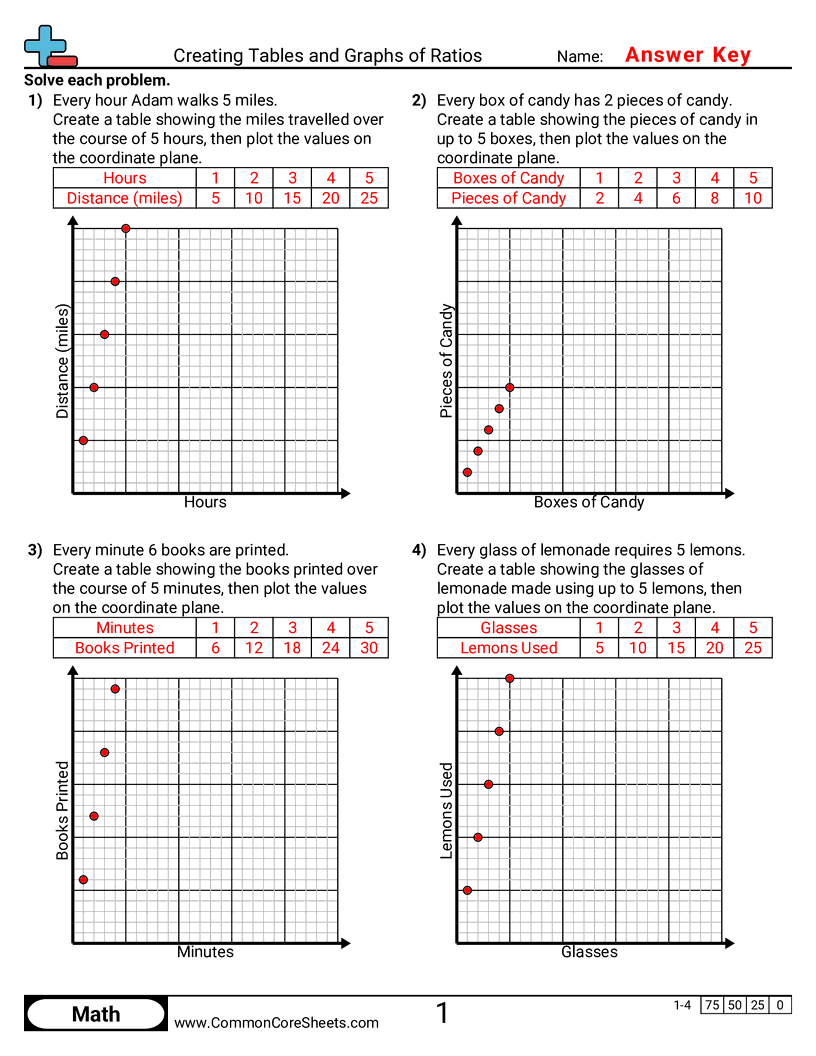
Turn a real-world ratio situation into a table of matching values. Plot ratio pairs as points on a coordinate plane. Use the graph to see and describe the proportional relationship.
Playwire Advertisement