Volume Worksheets
Free volume worksheets with answer key. No login or account needed. From visual volume problems to word volume problems, we've got you covered. A grading column and quick grade scale make grading a breeze, and modified pages help with lower level learners or when just introducing a topic. Great for teachers or for homeschool.
×
About these worksheets
Students explore volume concepts with rectangular prisms through a comprehensive set of activities. Worksheets cover finding total volume of combined prisms, calculating volume using the length × width × height formula, counting unit cubes, working with fractional dimensions, identifying smaller units within larger ones, writing volume expressions, and solving volume word problems. Resources span fifth through sixth grade Common Core standards.
5md5c
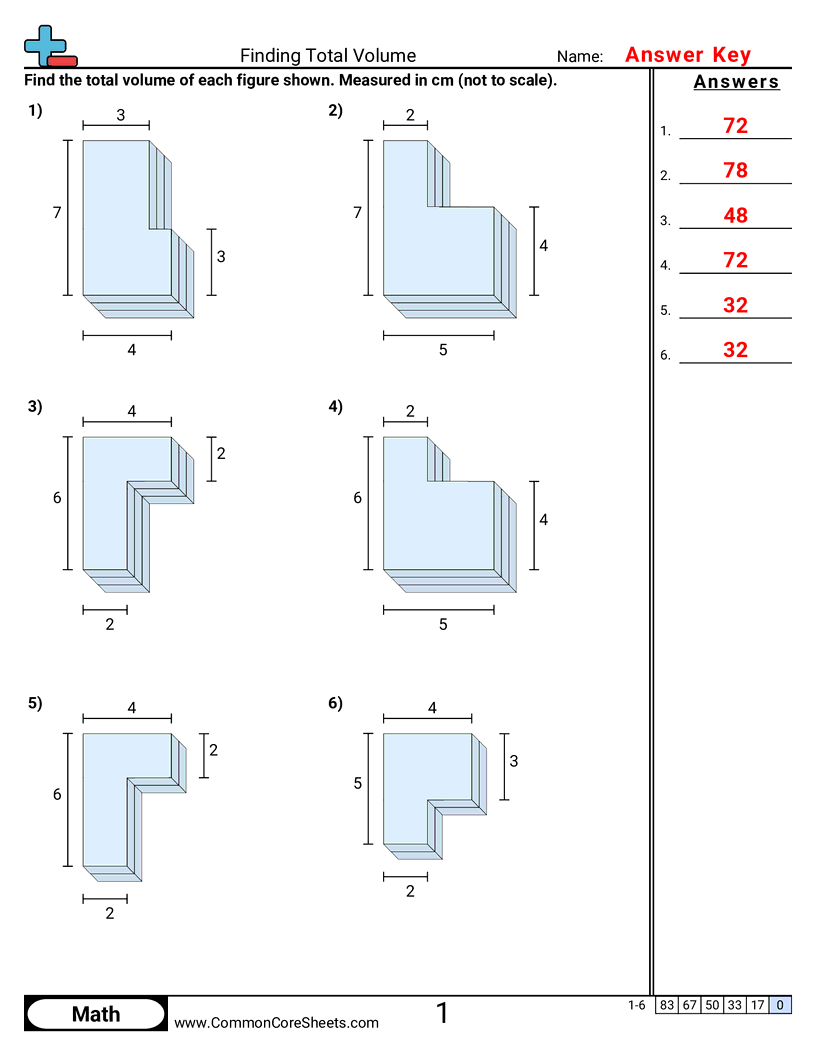
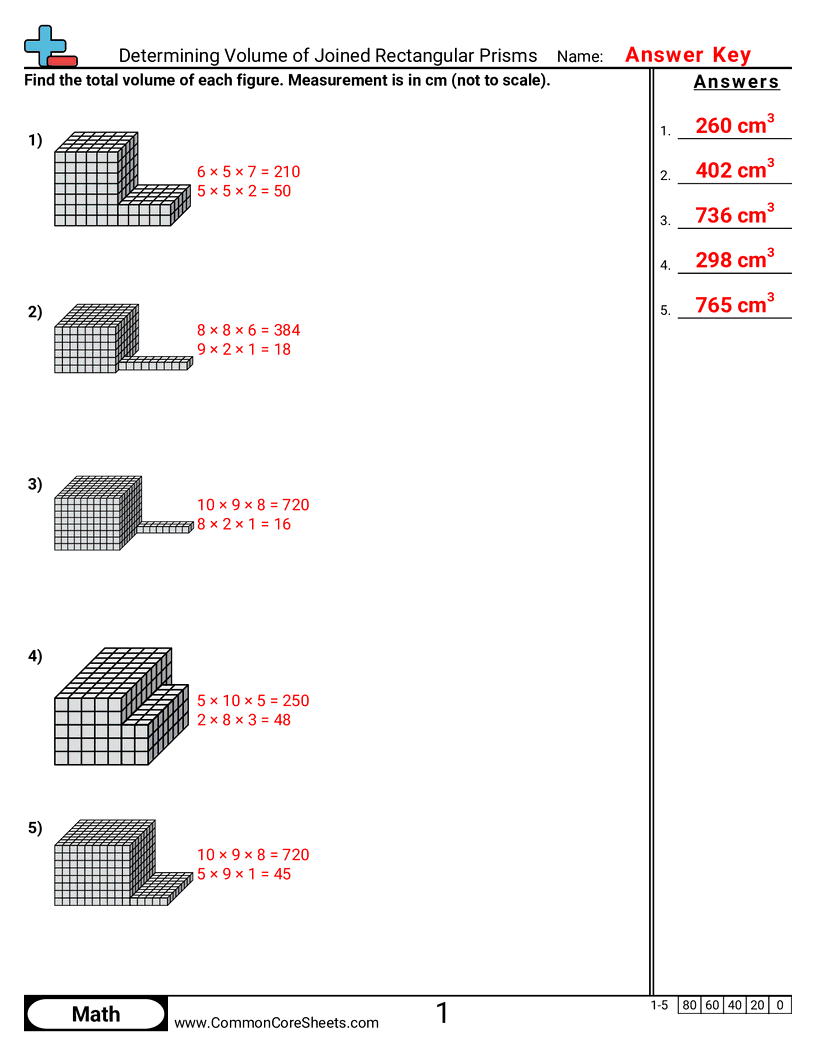
Practice finding the total volume of an L-shaped 3D figure by splitting it into two rectangular prisms Calculate the volume of each rectangular prism separately and then add them together Figure out the missing dimensions of each part by looking at the measurements on the whole shape
5md5b
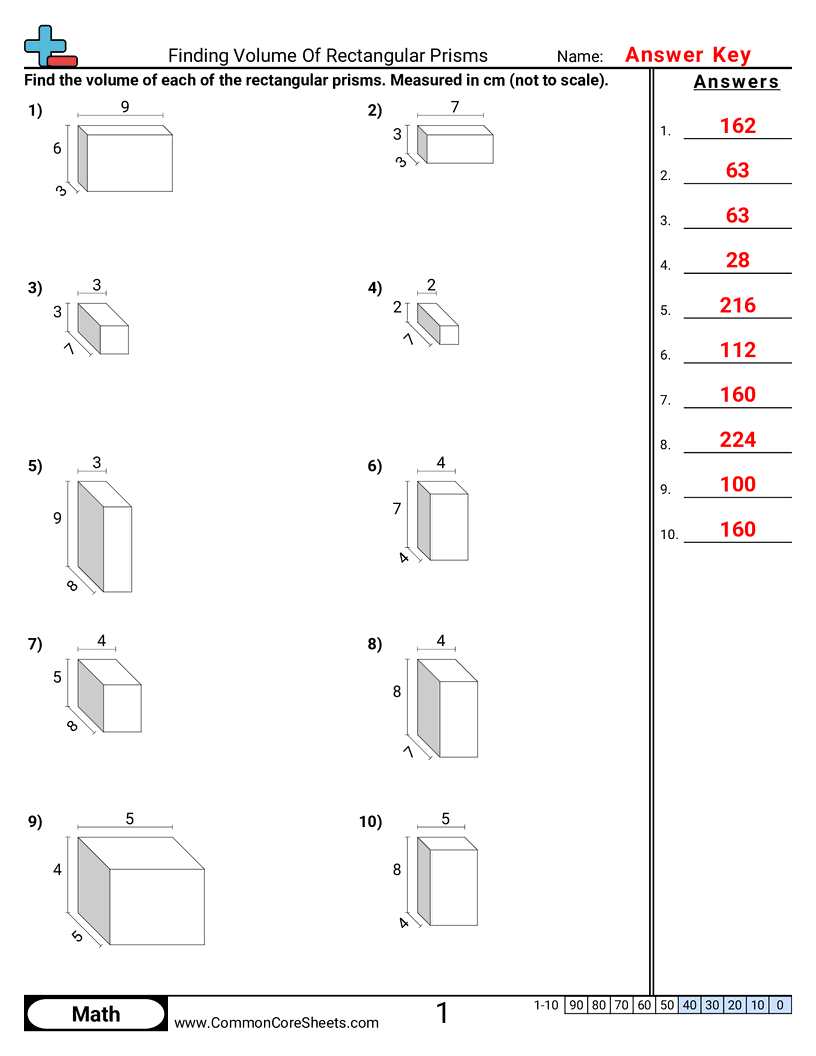
Practice finding the volume of a rectangular prism by multiplying length × width × height Read the three dimensions from a 3D drawing and multiply them together Work with whole number measurements in centimeters
5md4
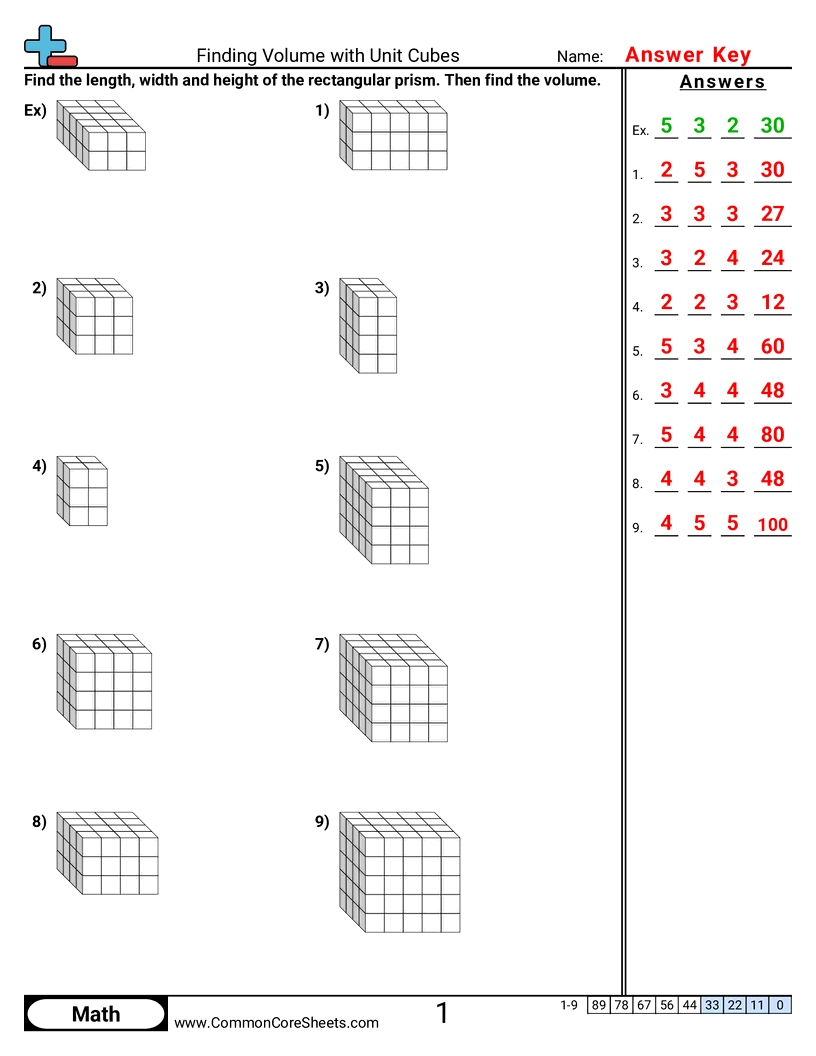
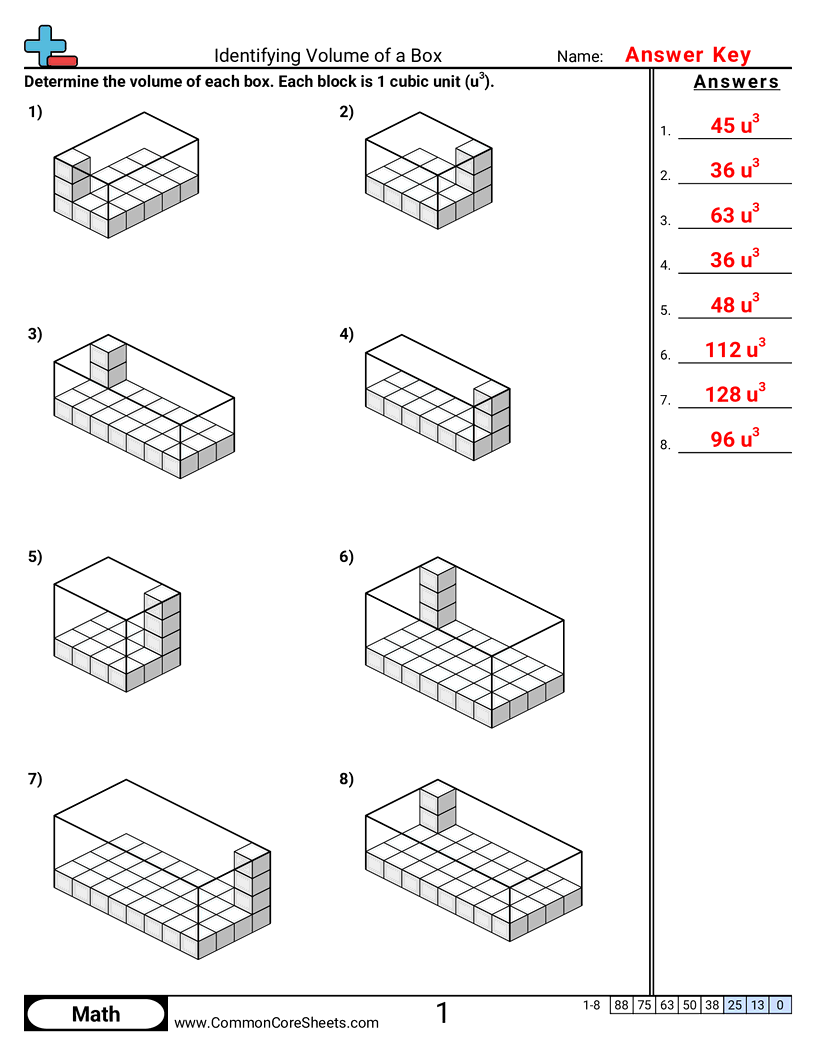
Count unit cubes in a picture to find the volume of a rectangular prism. Find the length, width, and height of a rectangular prism by looking at how the unit cubes are arranged. Use length × width × height to calculate volume in cubic units. Explain volume as how many cubes fill a box-shaped space without gaps or overlaps.
6g2
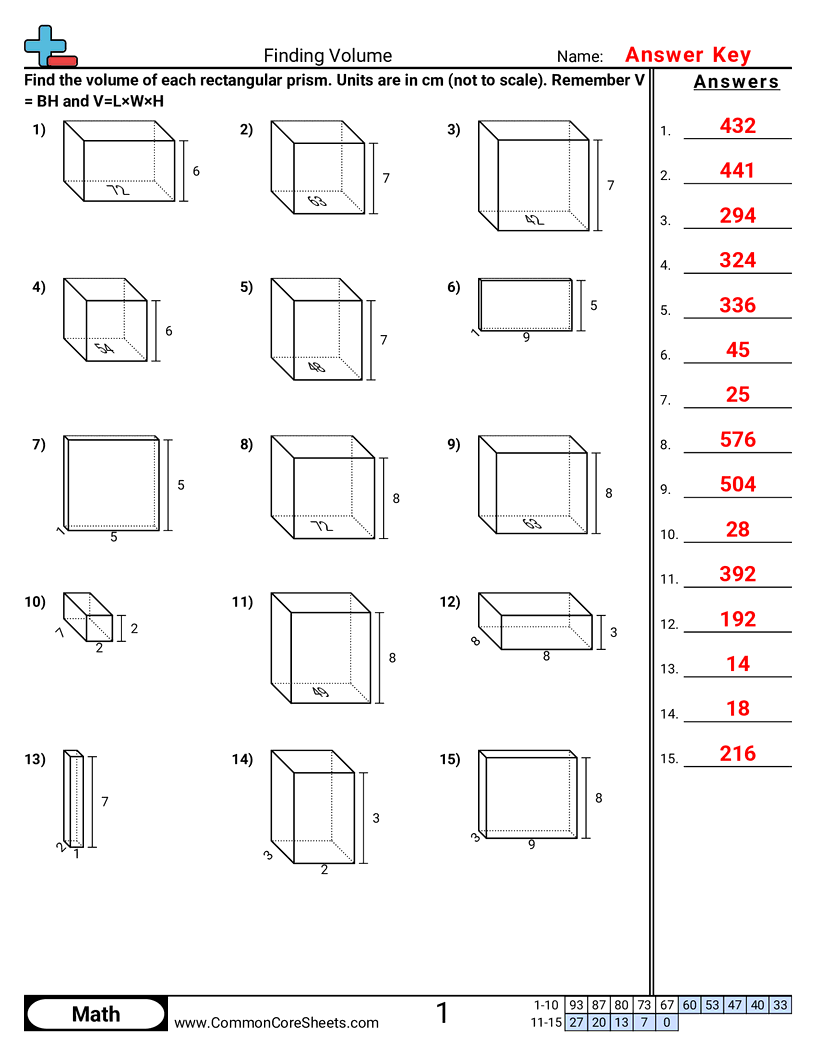
Find the volume of a rectangular prism by multiplying length × width × height. Read the dimensions of a box-shaped prism from a picture and use them to calculate volume.
6g2
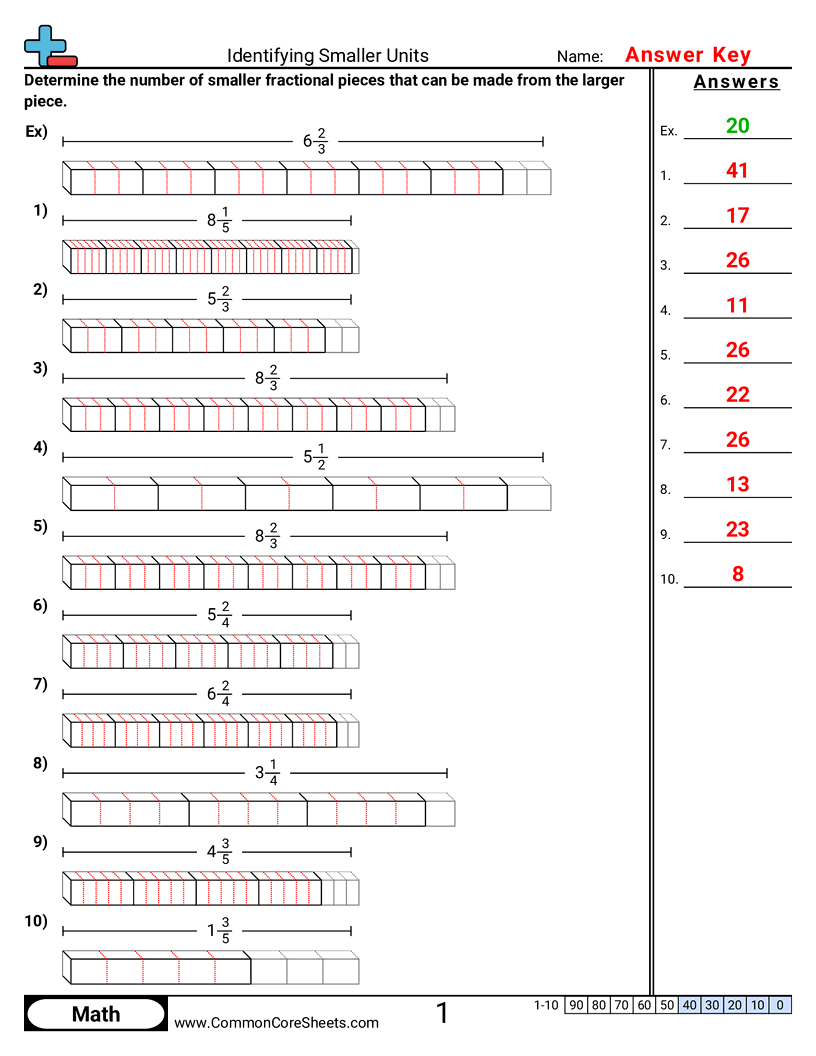
Practice converting a mixed number into the total number of fractional pieces it contains Use a visual model to count how many equal-sized parts make up the whole amount and the fraction together Multiply the whole number by the denominator and add the numerator to find the total number of pieces
6g2
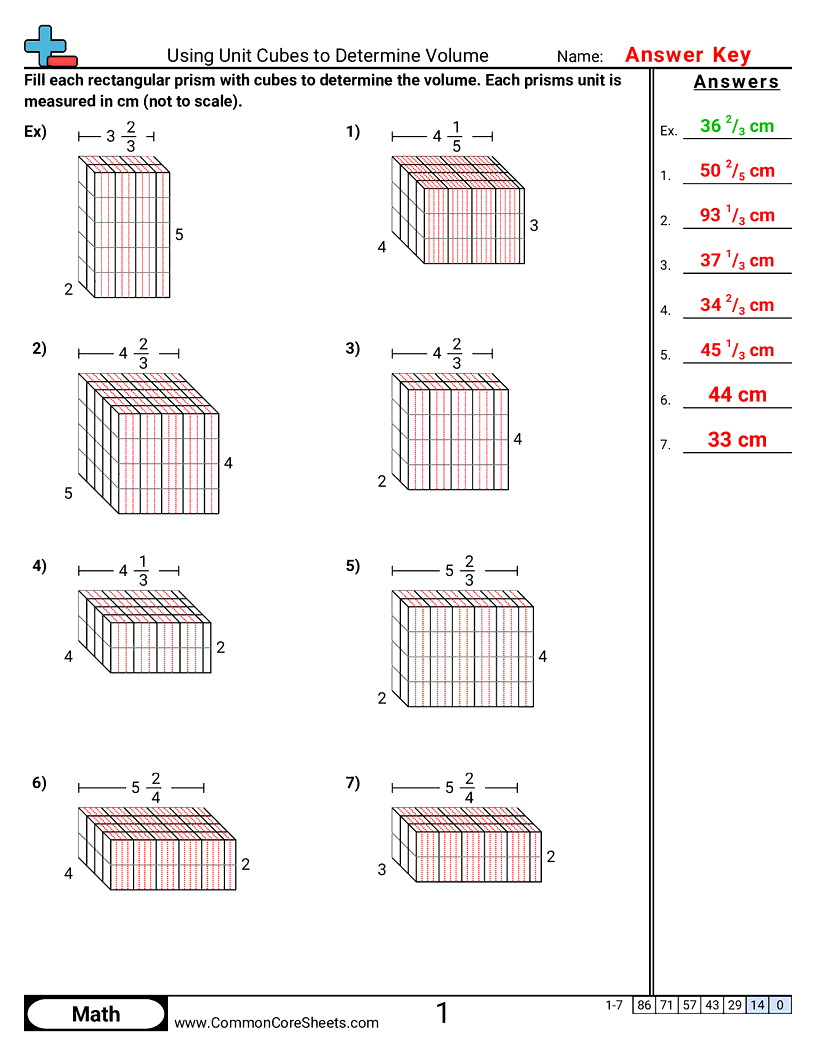
Practice finding the volume of a rectangular prism when one side length is a mixed number (like 4⅔) Multiply length × width × height when one dimension includes a fraction Use a visual model of unit cubes to understand how fractional parts affect volume
5md3b
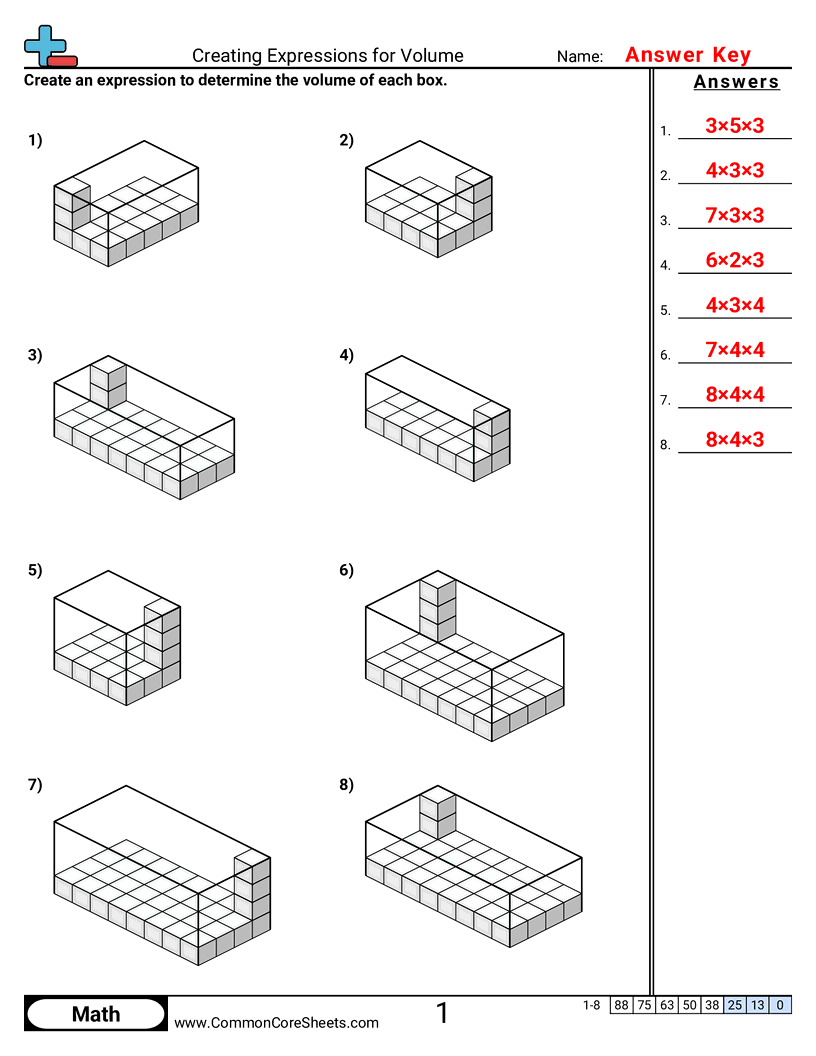
Write a volume expression for a rectangular box using length, width, and height. Read a diagram of a box and match each dimension to the correct part of the expression.
5md3b
Use length × width × height to calculate the volume of a rectangular prism. Connect the cube picture to the box’s dimensions (rows, columns, and layers).
Find the volume of each rectangular prism using length × width × height. Break a joined (composite) solid into smaller rectangular prisms you can measure. Add the volumes of the parts to get the total volume of the whole shape. Keep track of cubic units and label answers correctly.
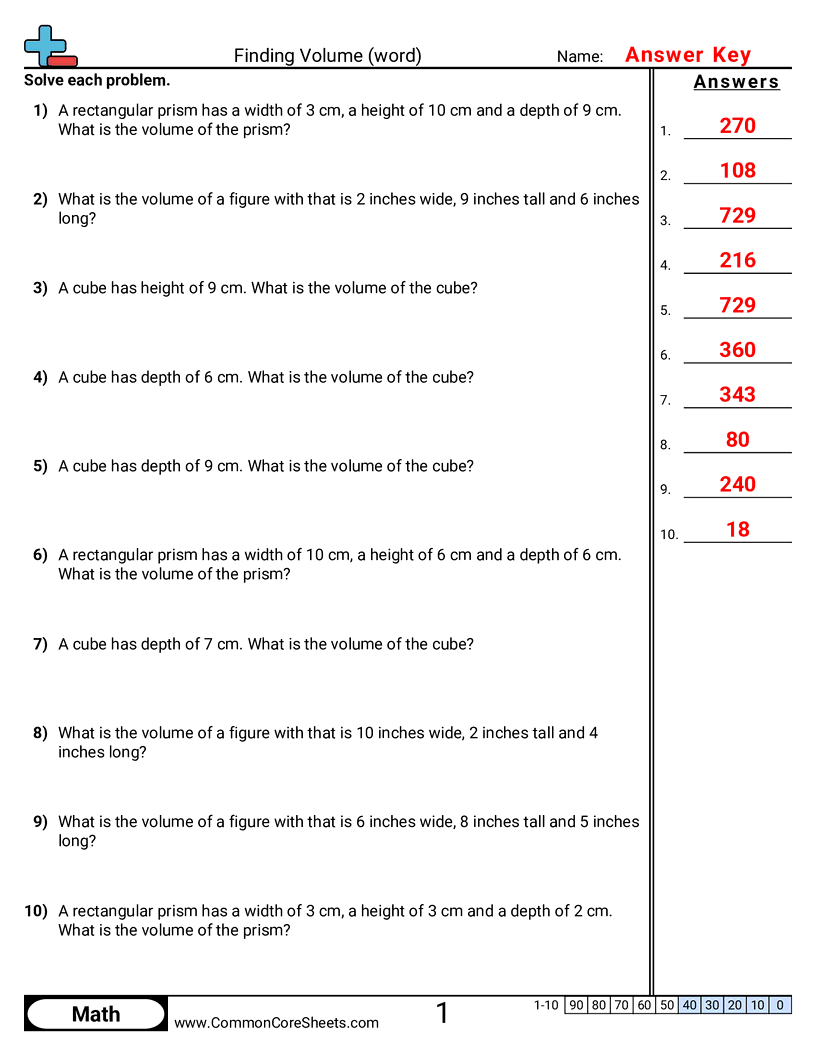
Use the volume formula (length × width × height) to find how much space a rectangular box-shaped object holds. Read word problems and pick out the length, width, and height from the information given.
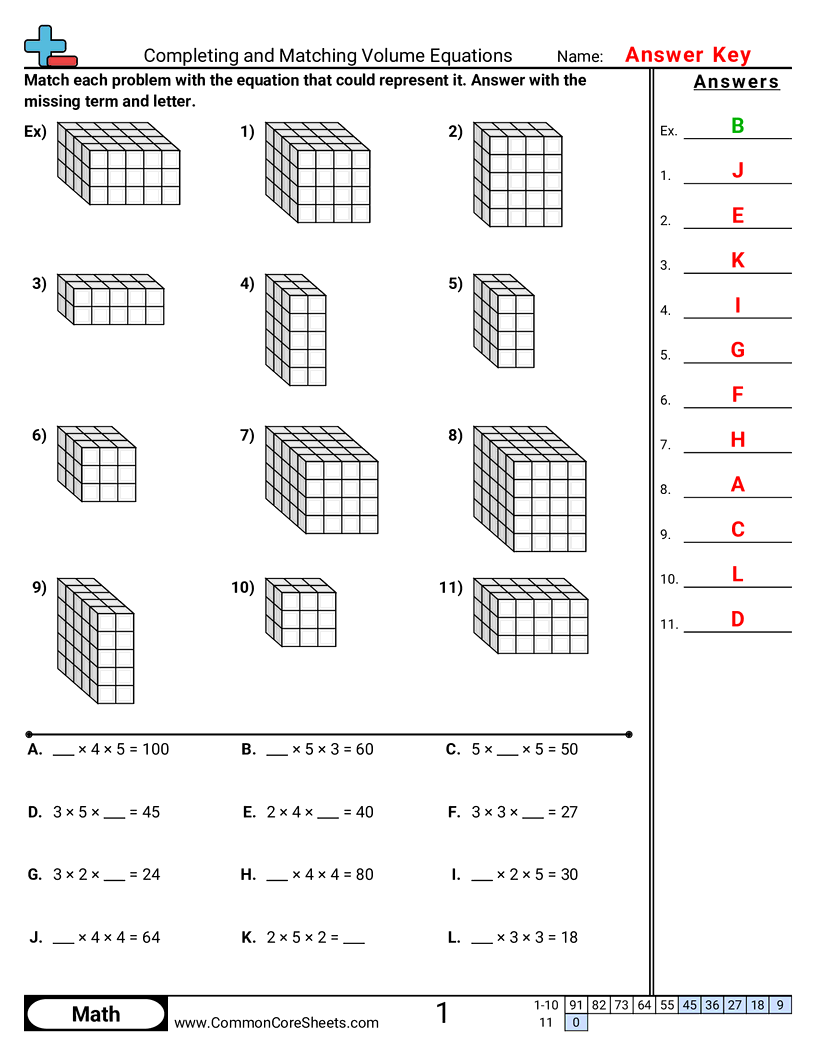
Use the volume formula to find the volume of a rectangular prism from its length, width, and height. Fill in missing numbers in a volume equation when one measurement or the volume is unknown. Match a prism picture or set of measurements to the correct volume equation.
Playwire Advertisement