3nf3d Worksheets
Number and Operations—Fractions
Develop understanding of fractions as numbers.
3Explain equivalence of fractions in special cases, and compare fractions by reasoning about their size.
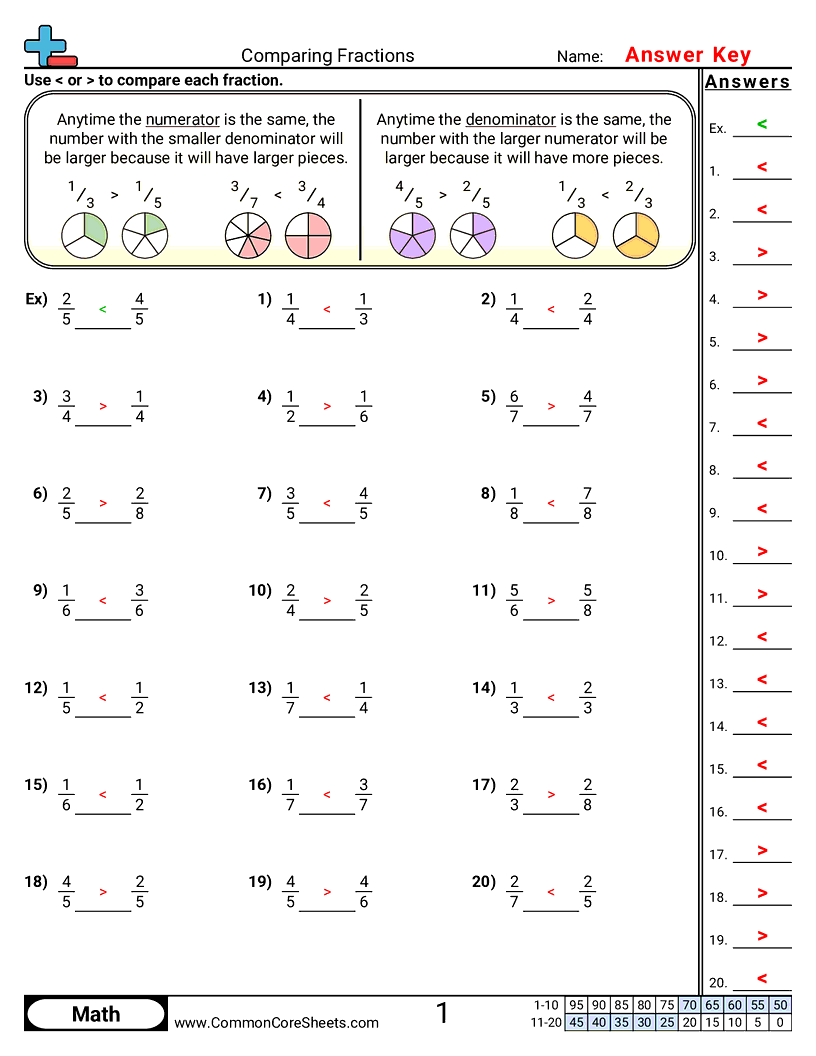
dCompare two fractions with the same numerator or the same denominator by reasoning about their size. Recognize that comparisons are valid only when the two fractions refer to the same whole. Record the results of comparisons with the symbols >, =, or <, and justify the conclusions, e.g., by using a visual fraction model.
3nf3d
3nf3d

- Compare two fractions when the denominators are the same by looking at which numerator is bigger.
- Compare two fractions when the numerators are the same by deciding which denominator makes bigger pieces.
- Use the symbols >, <, and = to show which fraction is larger, smaller, or if they are equal.
3nf3d

- Decide which of two fractions is greater, less, or if they are equal.
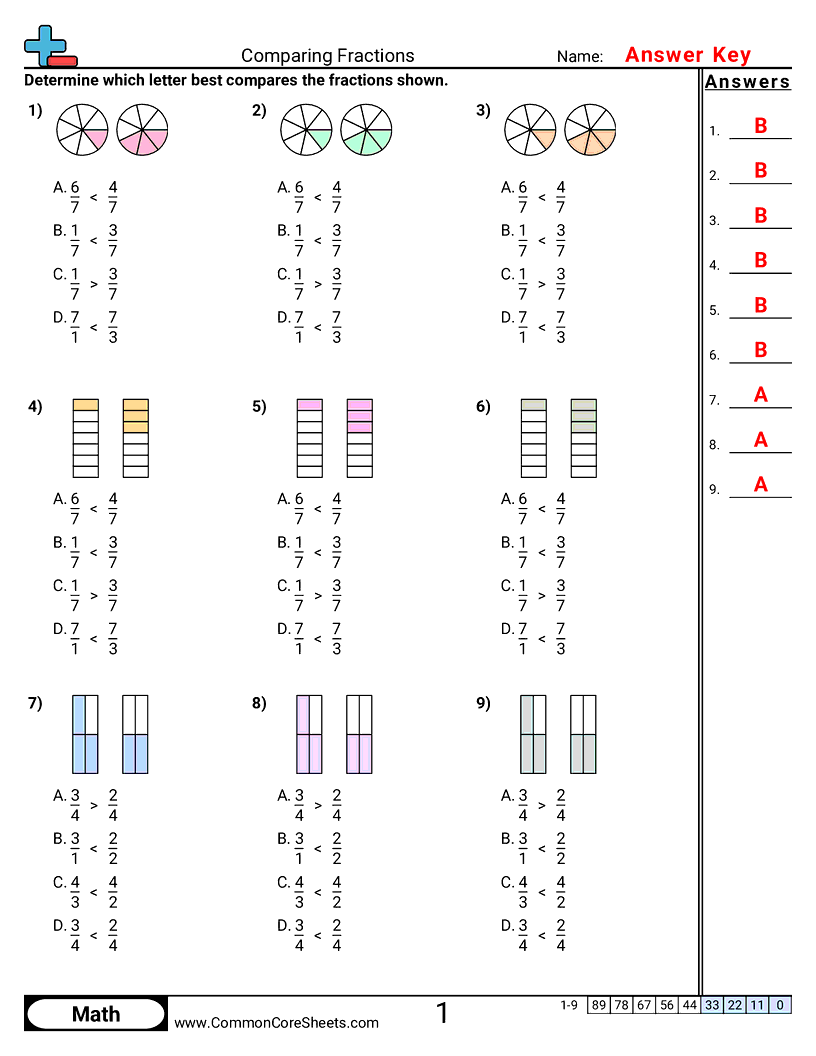
- Use fraction pictures or models to compare the size of two fractions.
- Identify the numeric value of a visual fraction model.
- Count equal parts to figure out the denominator and count shaded parts to figure out the numerator.
3nf3d

- Decide whether a fraction is equal to 0, 1/2, or 1.
- Use the numerator and denominator to tell when a fraction means none, half, or a whole.
3nf3d

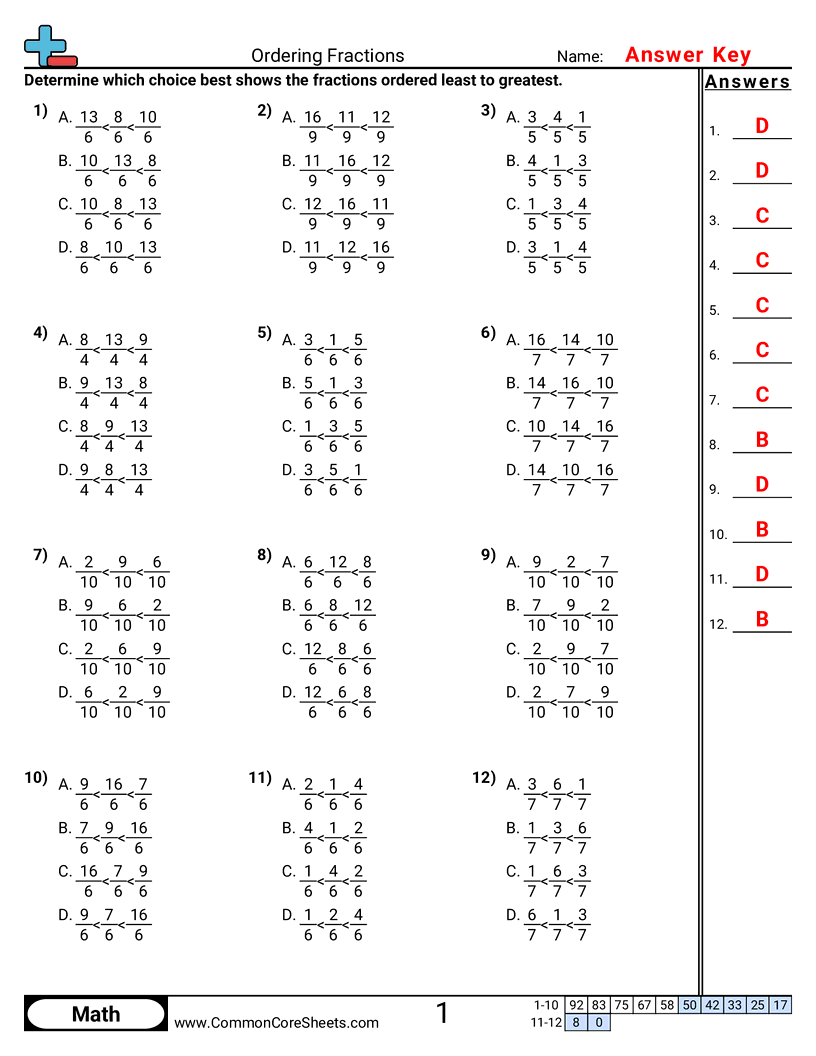
- Put a set of fractions in order from least to greatest.
- Compare two fractions to decide which one is larger or smaller.
- Use benchmark fractions like 0, 1/2, and 1 to judge fraction size.
3nf3d

- Compare two fractions and decide which one is greater, less, or if they are equal.
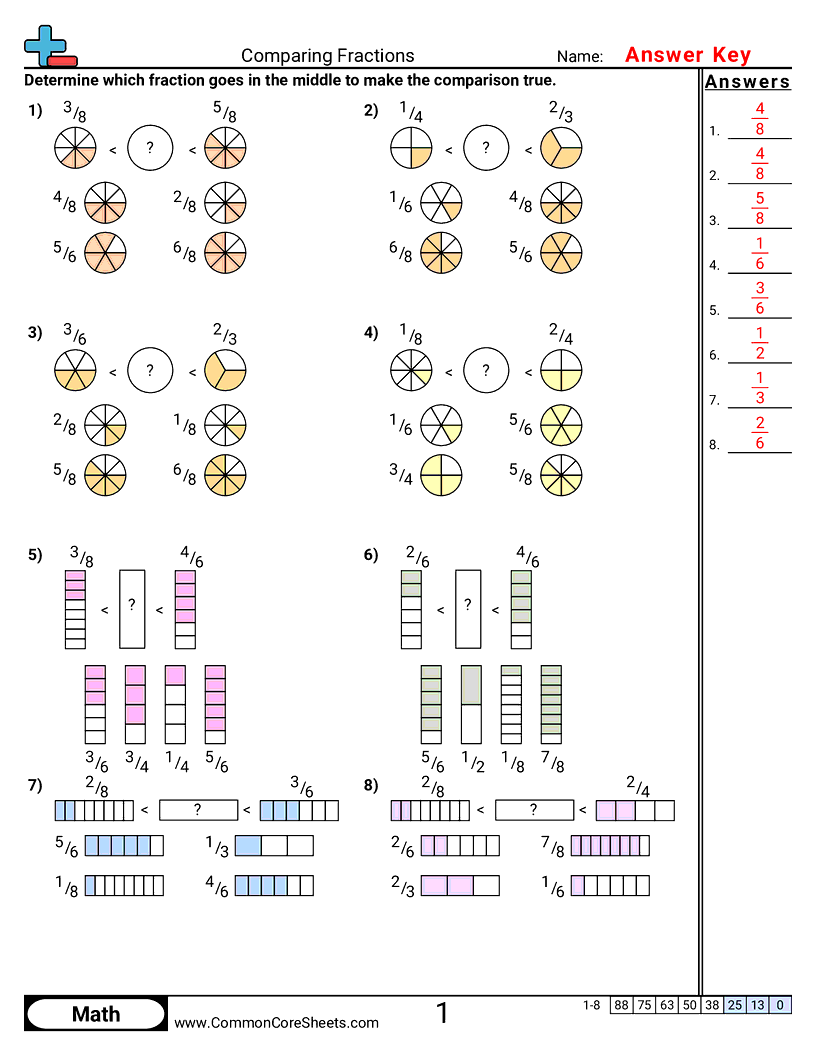
- Fill in the missing fraction to make a comparison statement true.
- Use fraction models or number lines to compare fractions by their size.
- Compare fractions with different denominators by thinking about equivalent fractions or common denominators.