4md1 Worksheets
Measurement and Data
1 Know relative sizes of measurement units within one system of units including km, m, cm; kg, g; lb, oz.; l, ml; hr, min, sec. Within a single system of measurement, express measurements in a larger unit in terms of a smaller unit. Record measurement equivalents in a two-column table. For example, know that 1 ft is 12 times as long as 1 in. Express the length of a 4 ft snake as 48 in. Generate a conversion table for feet and inches listing the number pairs (1, 12], (2, 24], (3, 36], ...
4md1
4md1
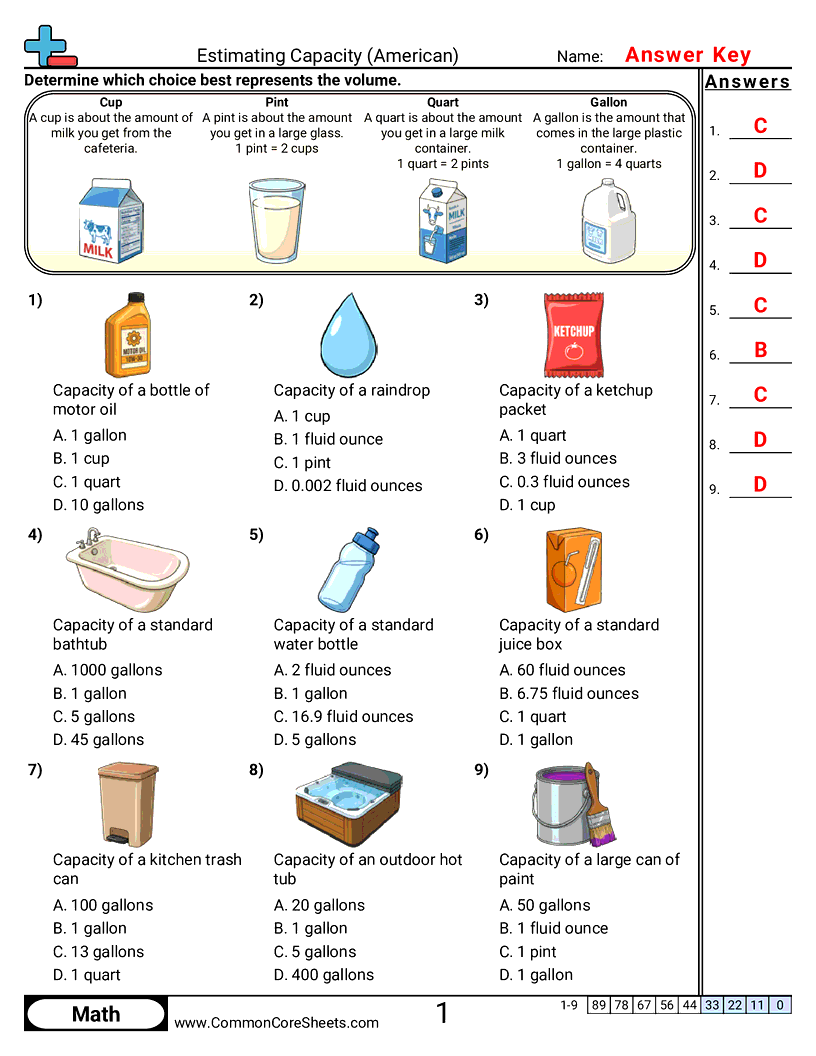
Match everyday containers to the best U.S. capacity unit (cup, pint, quart, gallon, or fluid ounce). Use pictures to judge whether something holds a little, some, or a lot of liquid. Get familiar with what common amounts like 1 cup, 1 pint, 1 quart, and 1 gallon look like in real life.
4md1
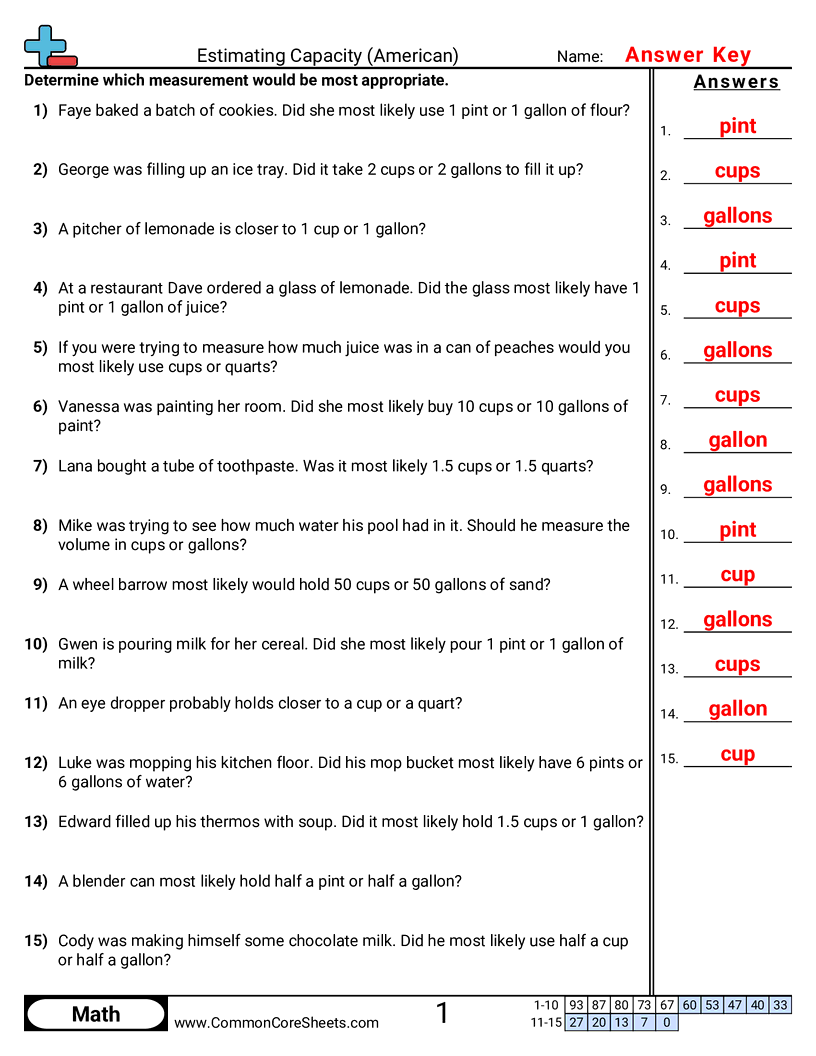
Choose the best US capacity unit (cup, pint, quart, gallon, or fluid ounce) to match a real-life situation. Tell when a container or amount is small, medium, or large and pick a unit that makes sense.
4md1
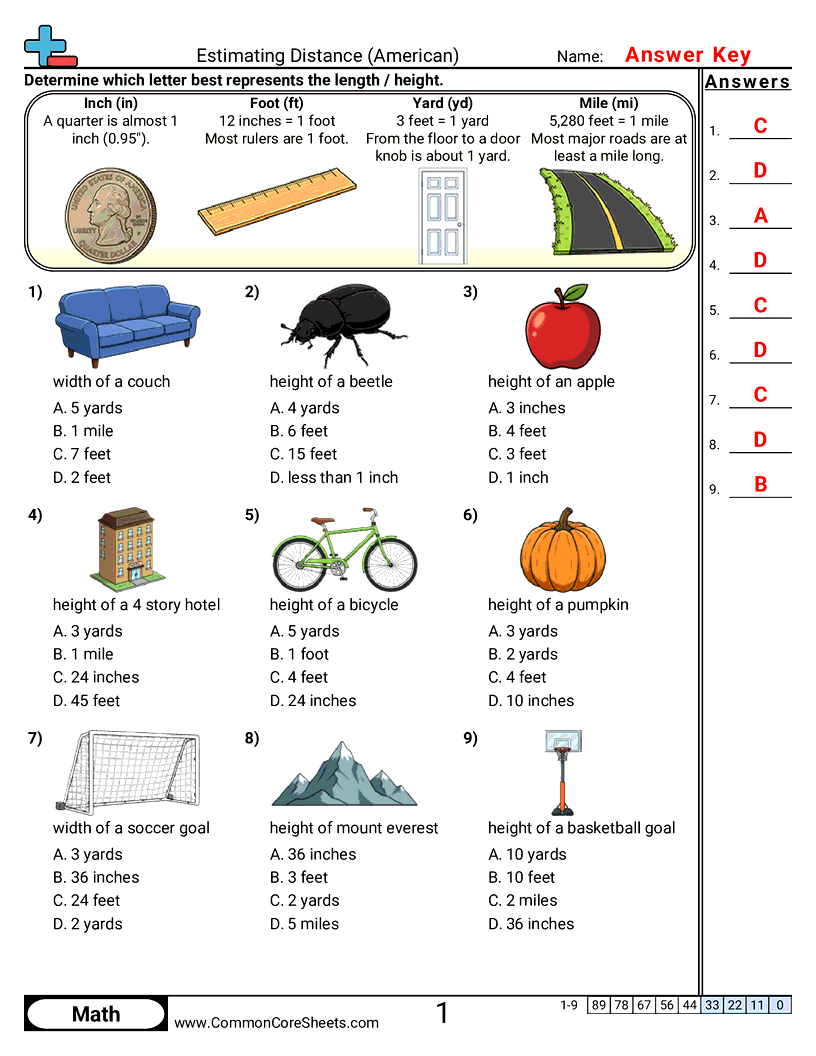
Choose whether inches, feet, yards, or miles makes the most sense for a given distance. Use what you know about common objects and places to make a reasonable estimate of a length. Explain why one unit is more appropriate than another for measuring a specific distance.
4md1
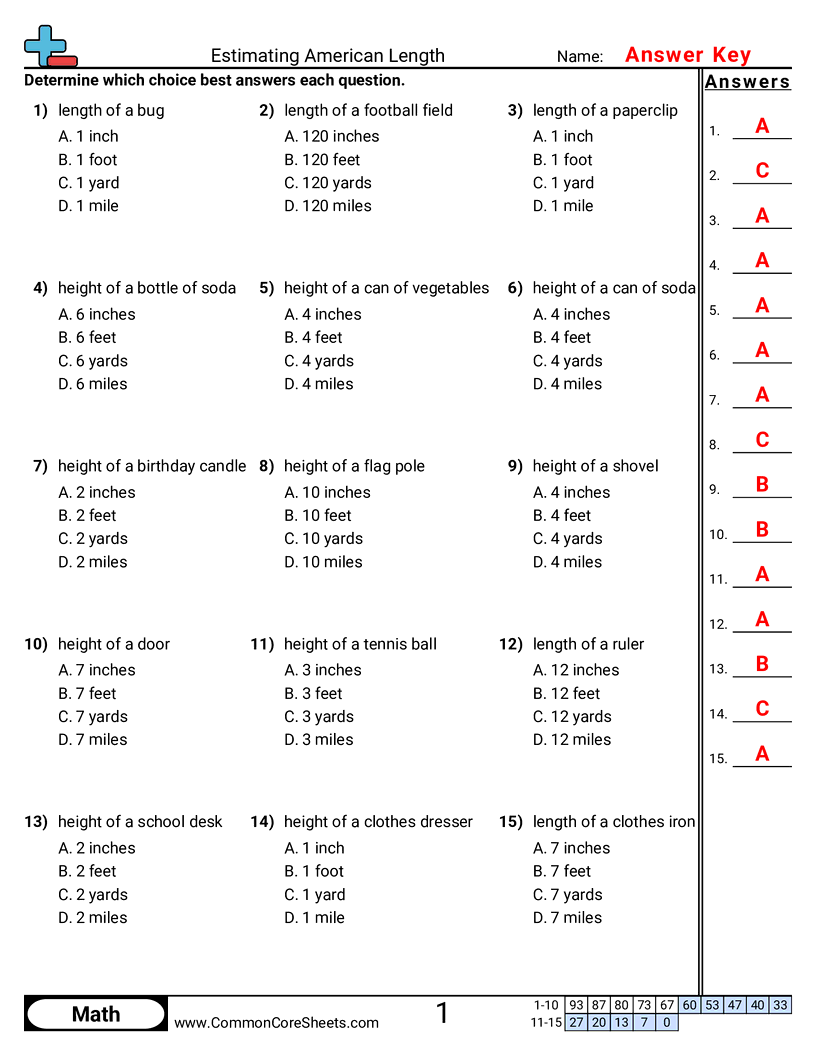
Get better at making a reasonable guess for how long an object is without measuring it. Choose the best length from a few options by comparing what you see to familiar sizes (like an inch, foot, or yard). Decide which unit makes sense for an object’s length (inches, feet, or yards). Use benchmark lengths to tell when an estimate is too short or too long.
4md1
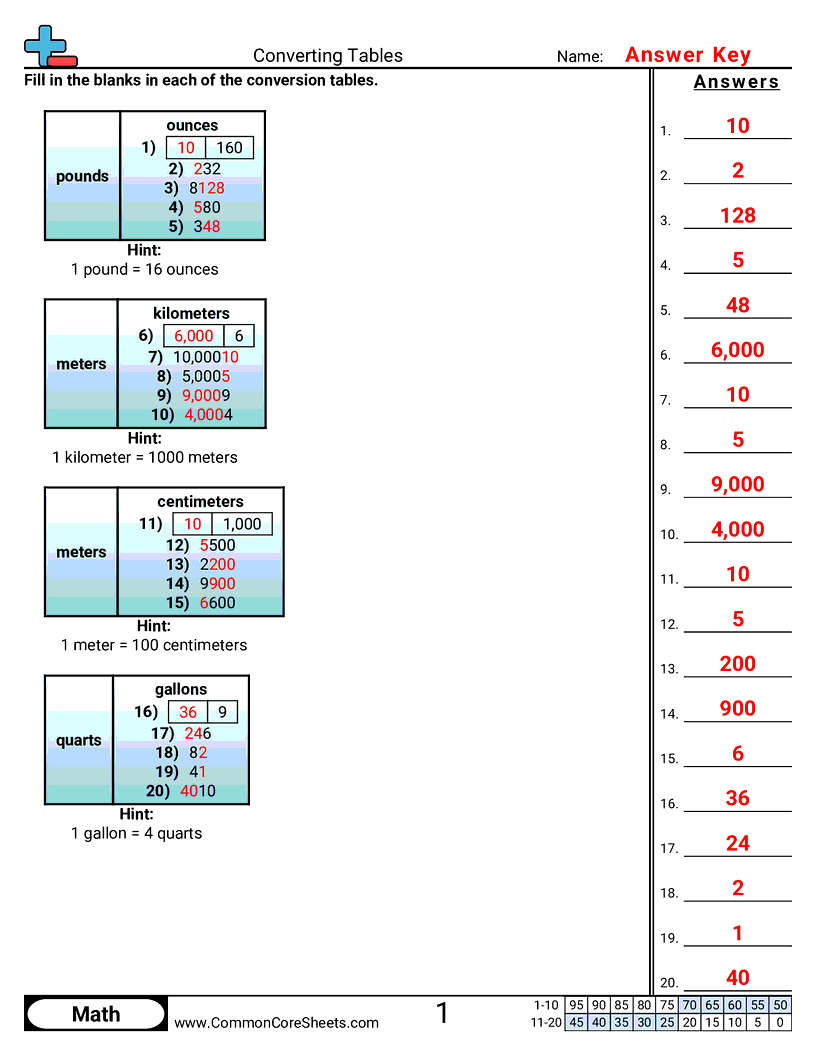
Convert between larger and smaller units of length, weight, and liquid volume. Use a conversion table to find the matching value in a different unit. Multiply or divide by a conversion factor to fill in missing measurements.
4md1
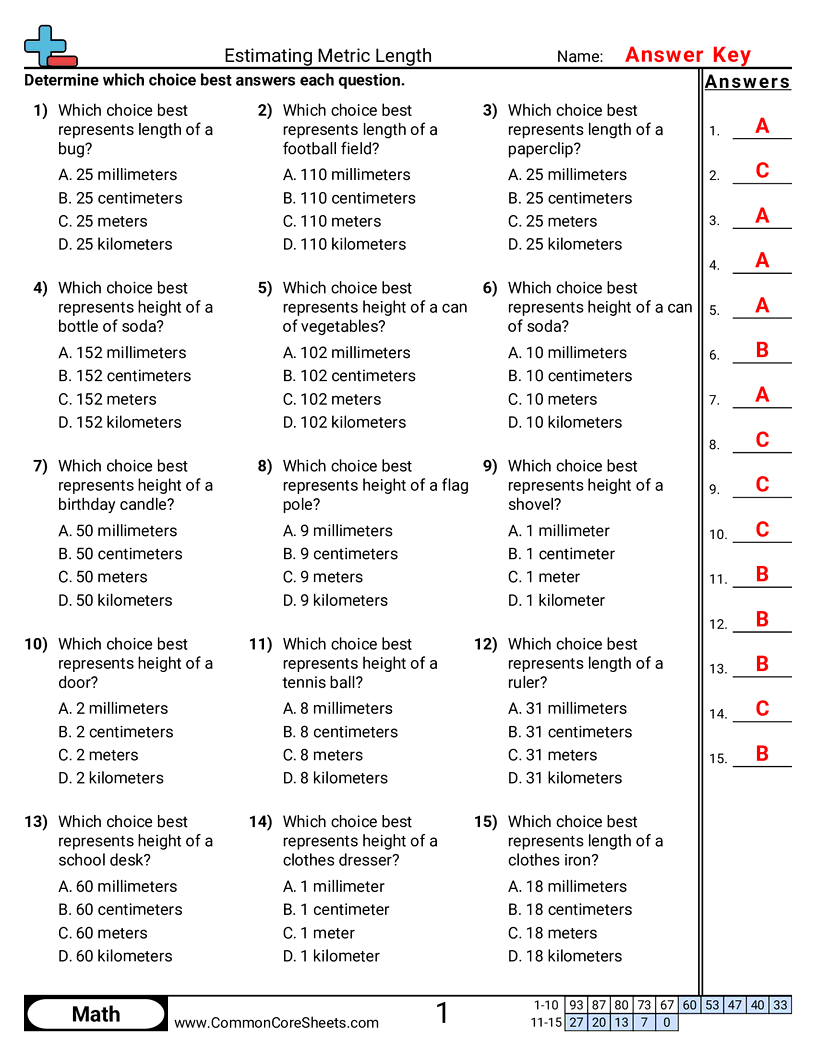
Choose the best metric unit to describe how long something is. Tell when millimeters, centimeters, meters, or kilometers make the most sense for an item. Compare a few unit choices and pick the one that matches a reasonable real-world size. Read a short description of an object and decide which metric measurement fits.
4md1
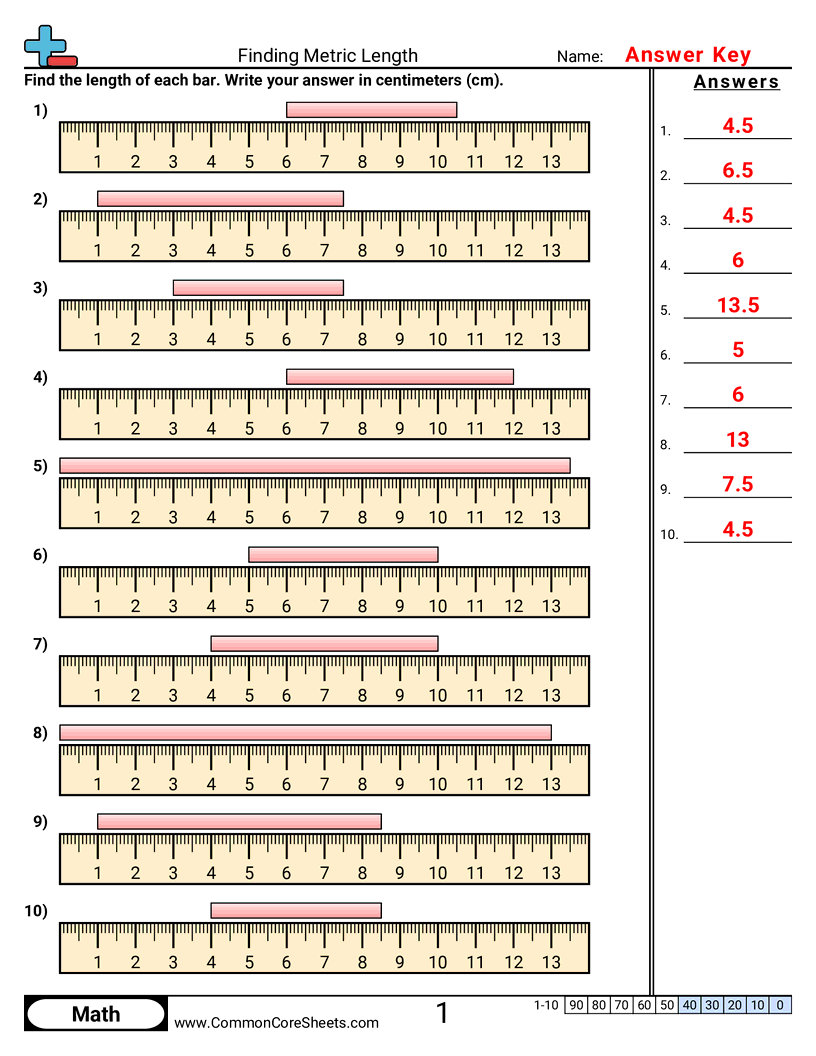
Practice reading a centimeter ruler to find the length of a bar, including half-centimeter measurements Subtract the starting point from the ending point when the bar doesn't begin at zero Measure to the nearest half centimeter using the smaller tick marks on the ruler
4md1
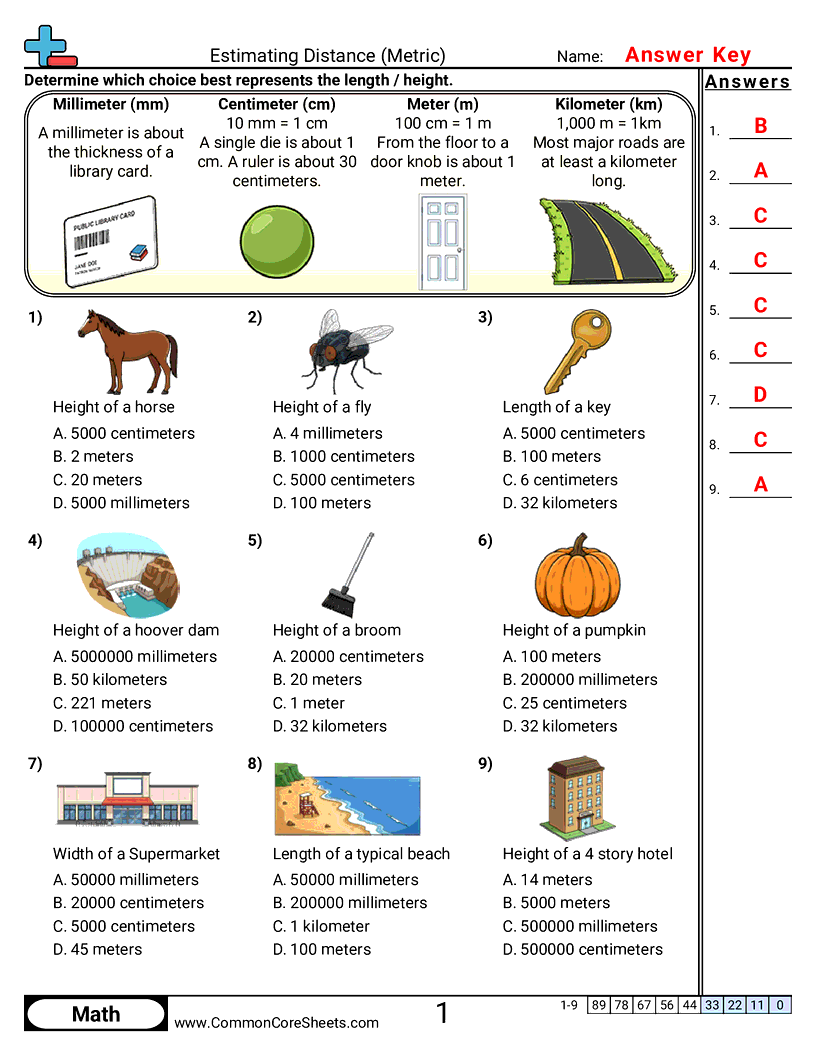
Practice making a reasonable guess about how long something is using metric units. Learn to choose the best unit for a length (millimeters, centimeters, meters, or kilometers). Compare a few possible lengths and pick the one that makes the most sense for the object shown. Use what you know about common objects to judge about how long something is without measuring.
4md1
Convert between pounds and ounces. Fill in missing weights in a chart using the conversion facts.
4md1
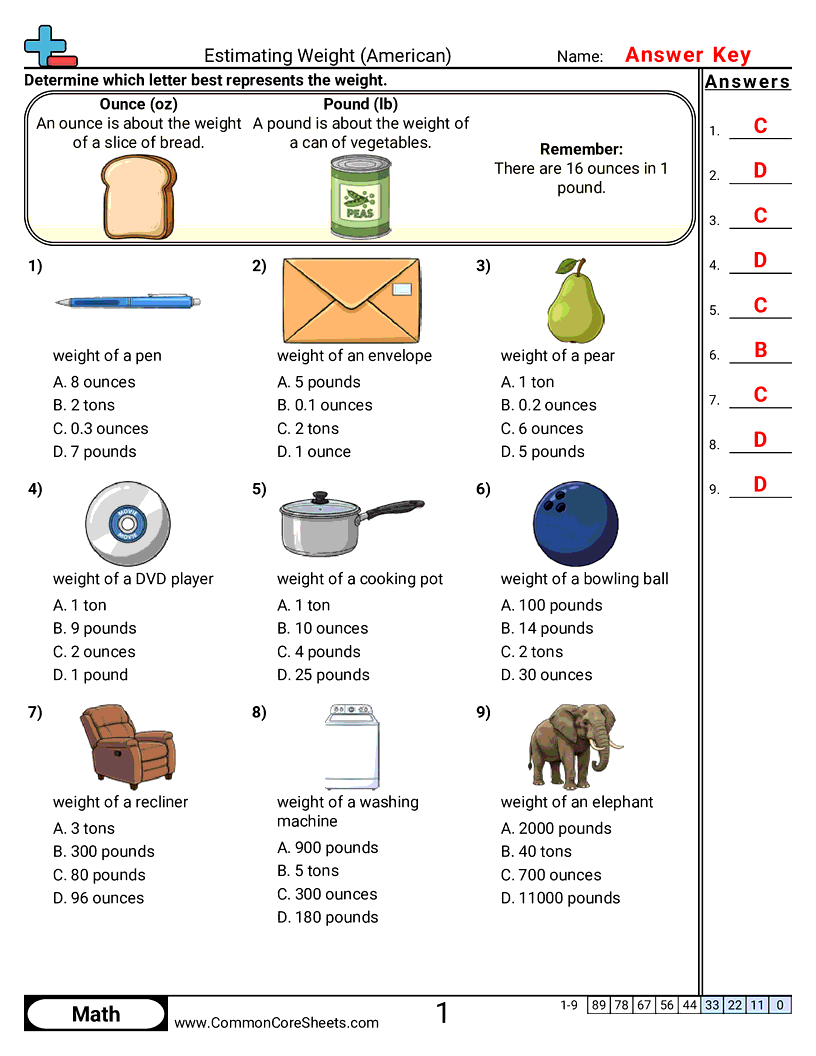
Estimate how much common objects weigh using tons, pounds and ounces. Choose the most reasonable weight from a few options by comparing sizes and what you already know. Tell the difference between light items measured in ounces and heavier items measured in pounds.
4md1
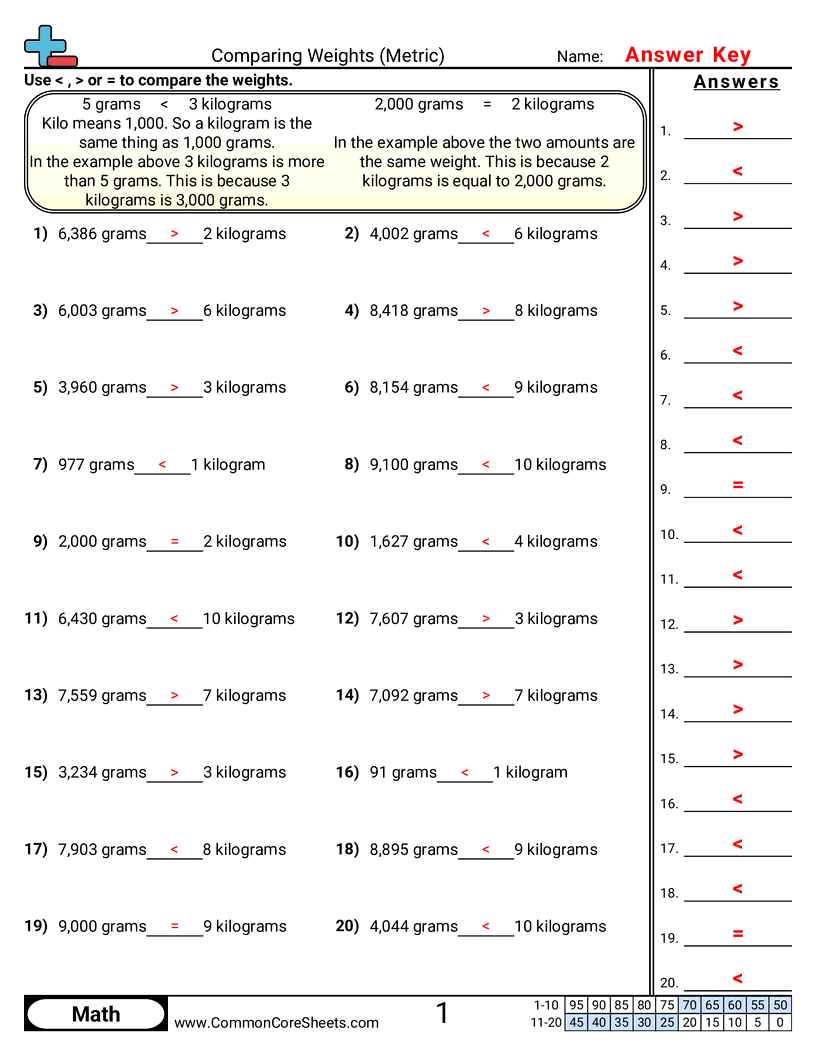
Practice converting between grams and kilograms. Compare two weights even when they are written in different units. Use >, <, and = to show which weight is greater, less, or equal.
4md1
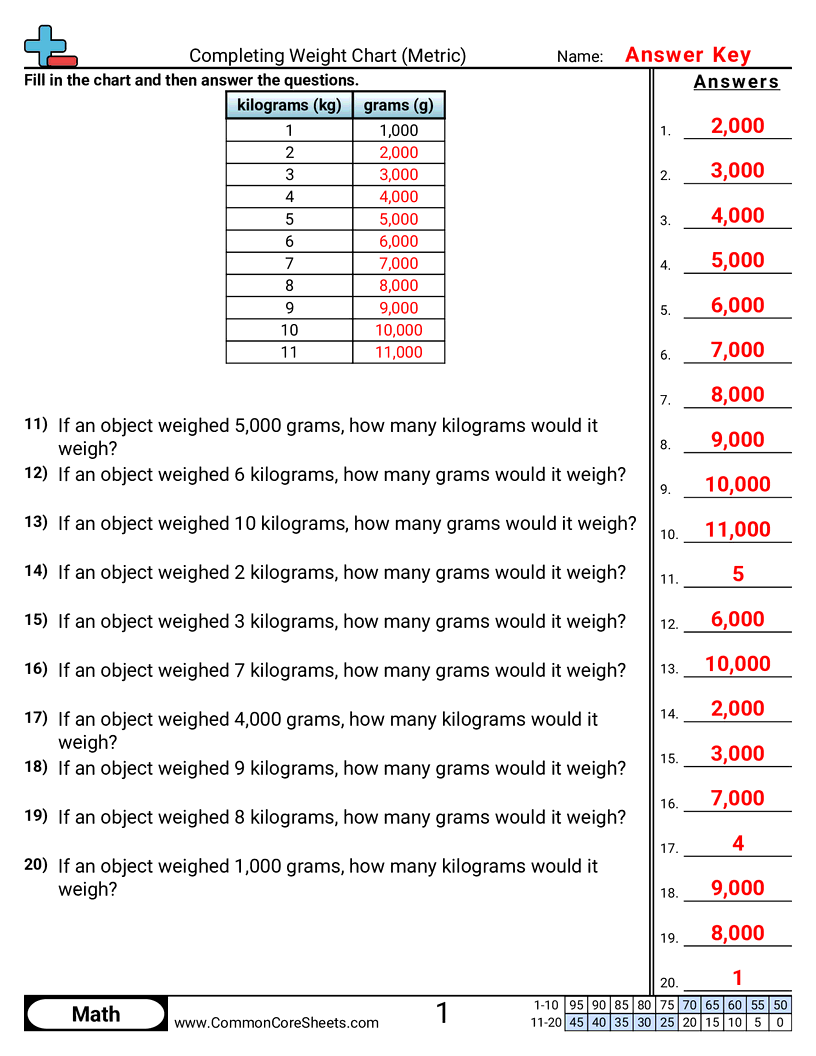
Convert between metric weight units like grams and kilograms. Fill in missing values in a weight chart by using what you know about metric conversions. Answer questions that require switching units before you can solve the problem.
Playwire Advertisement