traditional subtraction Worksheets
Our Traditional Subtraction worksheets offer comprehensive practice for grades 1-4 with 19 different problem types. Students can master essential skills including subtracting multiples of ten, working within 20 and 100, subtracting across zeros, and multi-digit problems with and without regrouping in both vertical and horizontal formats.
×
About these worksheets
These worksheets provide structured practice with traditional subtraction methods. Topics include subtracting multiples of ten, subtracting within 20 and 100, subtracting across zeros, two- through four-digit subtraction with and without regrouping, vertical and horizontal formats, subtracting from a specific value, and solving mixed addition and subtraction problems. Resources span first through fourth grade Common Core standards.
1nbt6
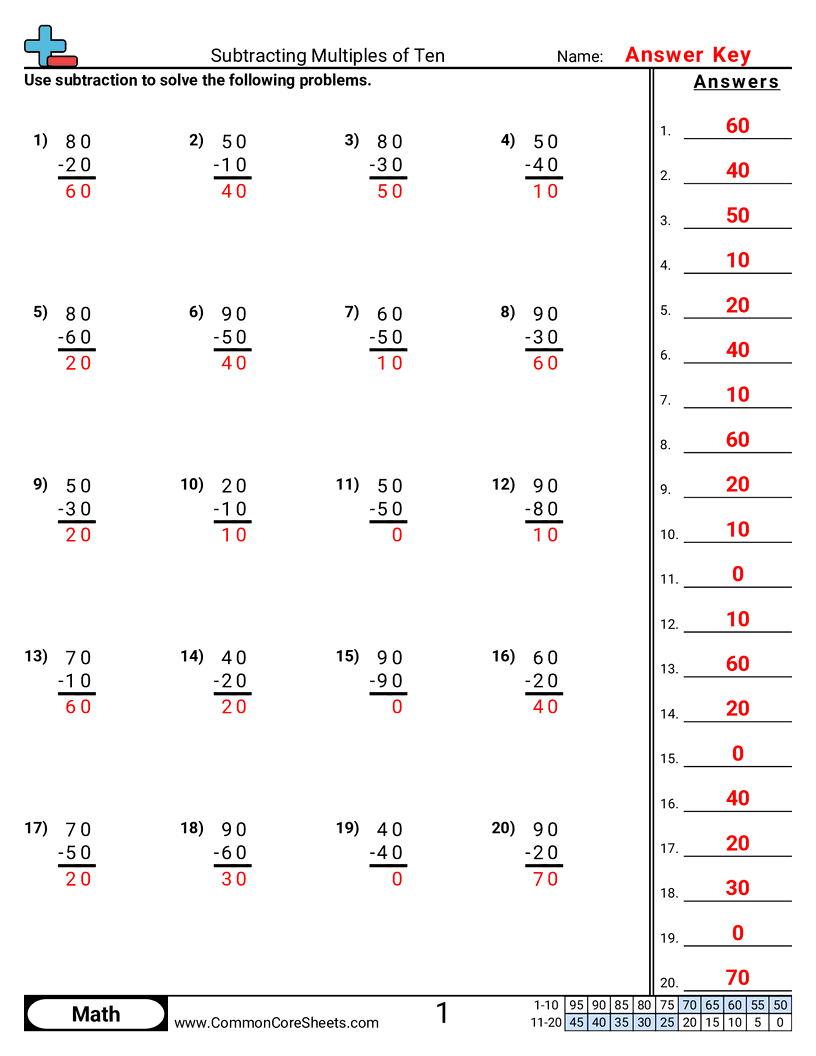
Subtract tens (like 30, 40, or 70) from a number to find the difference. Notice how subtracting a multiple of 10 changes the tens digit while the ones digit stays the same.
1nbt6
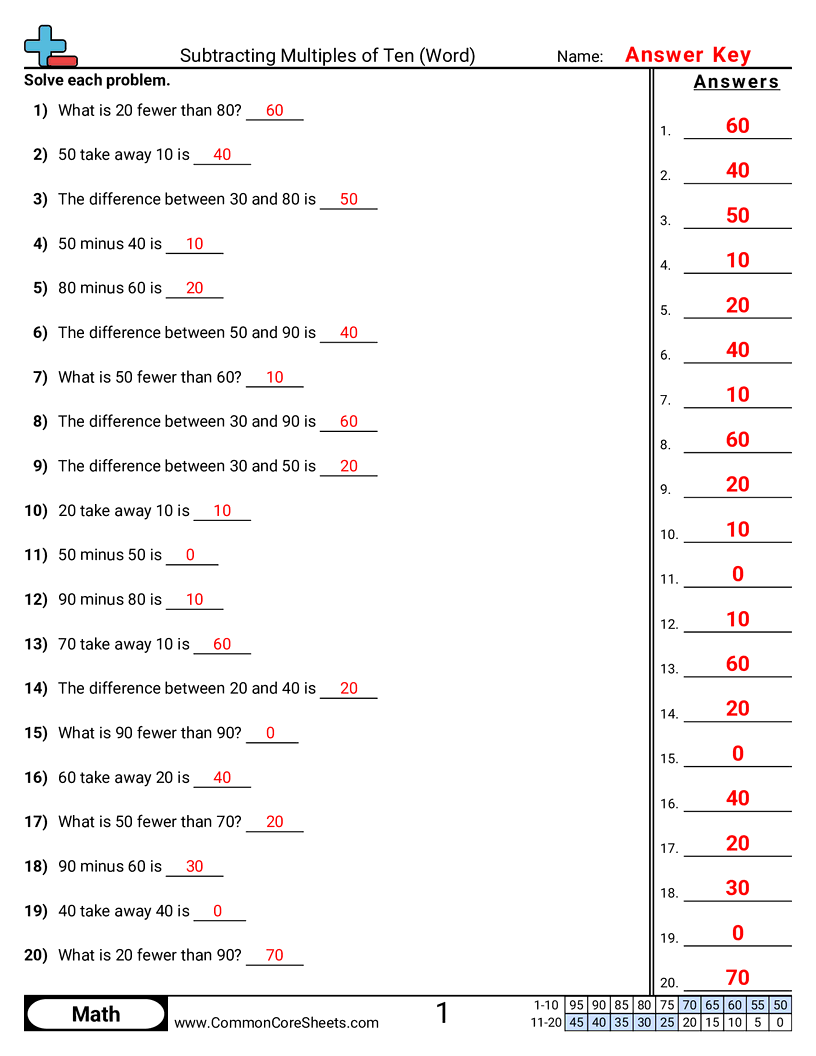
Subtract tens from tens to find how many are left. Solve short word problems where the numbers are multiples of ten.
1oa6
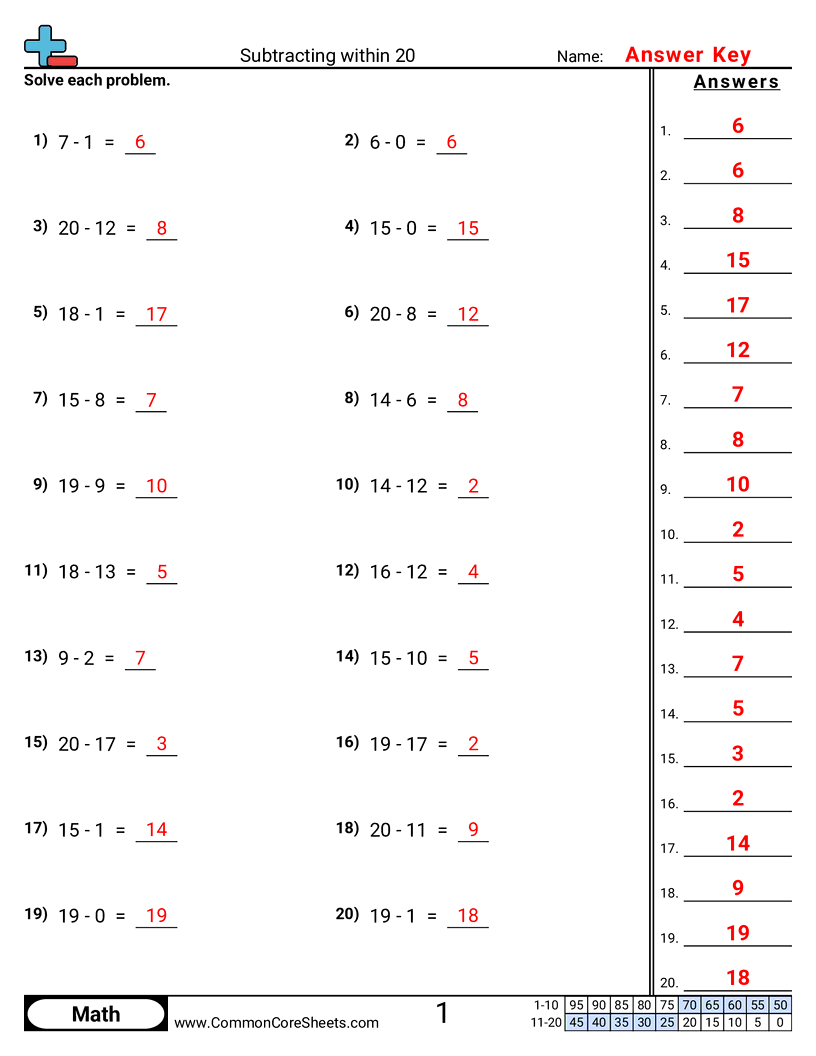
Subtract one number from another when both numbers are 20 or less. Use subtraction facts to find the difference quickly and accurately. Understand subtraction as taking away from a starting number.
2nbt5
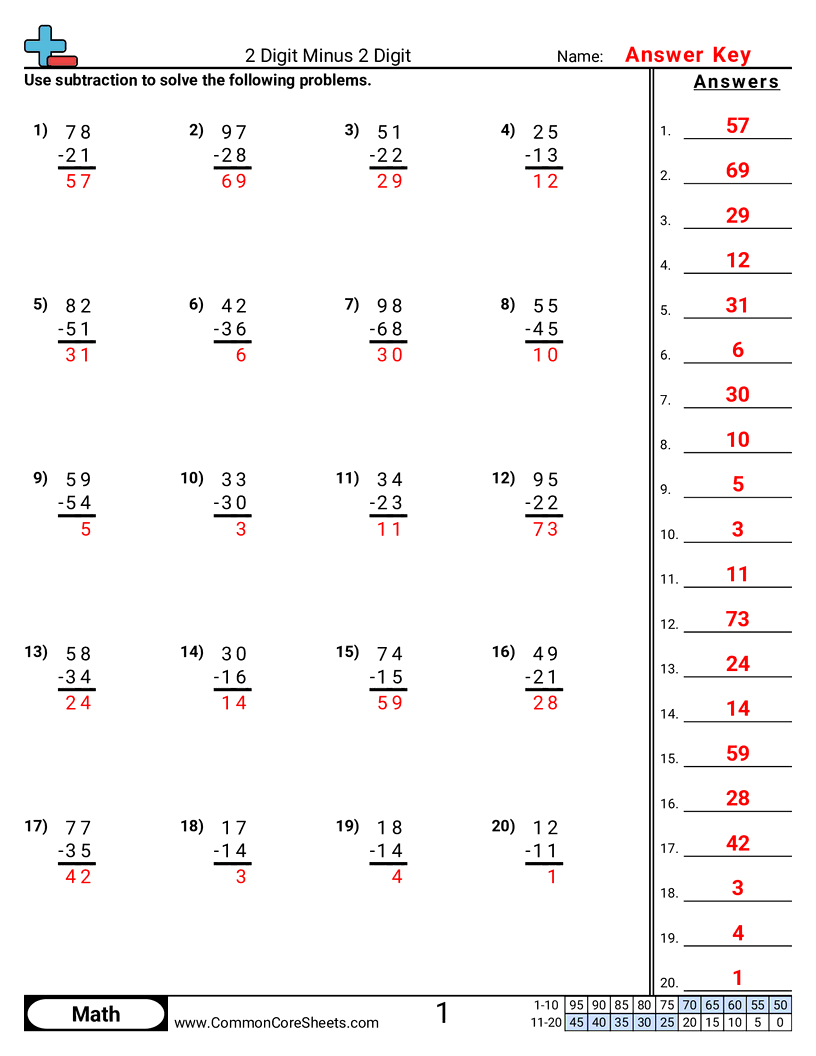
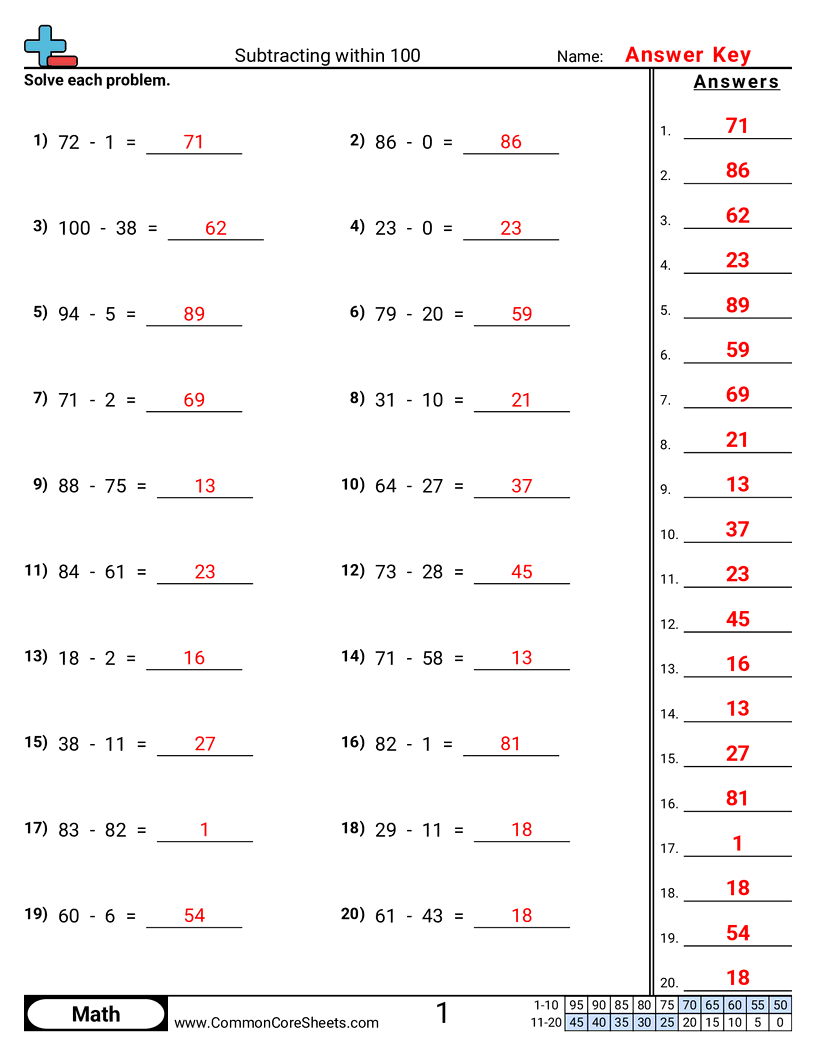
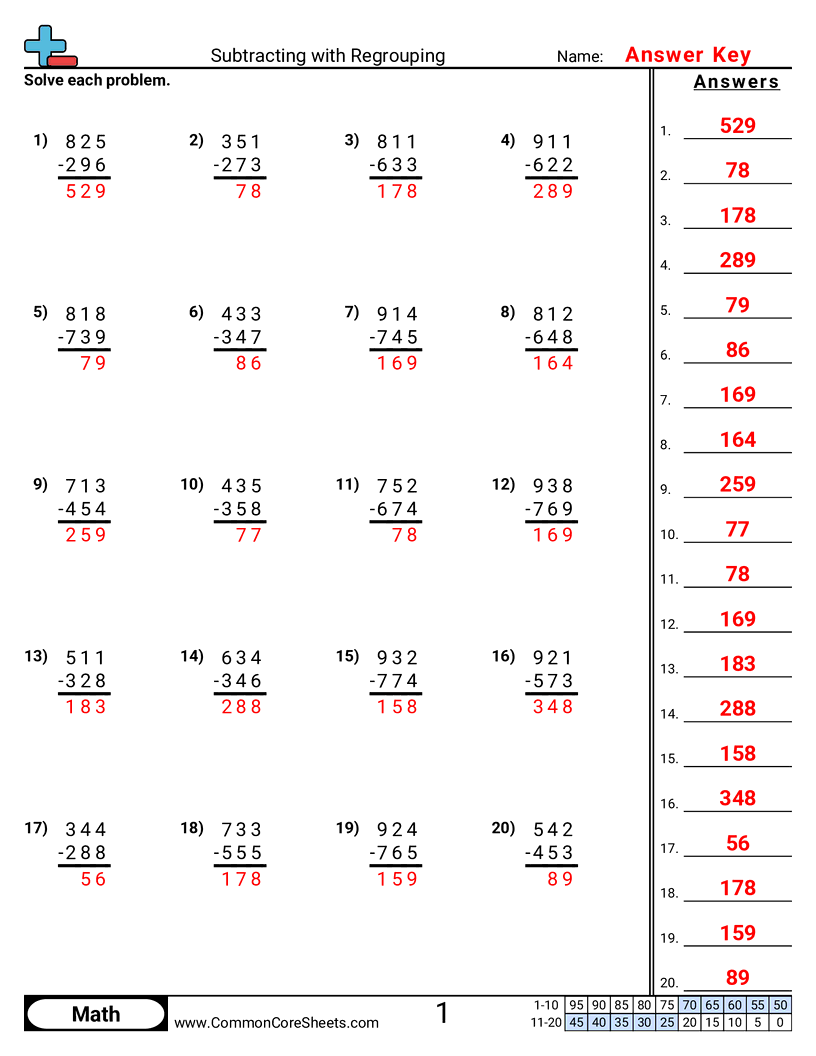
Subtract one 2-digit number from another to find the difference. Line up tens and ones correctly before subtracting. Use borrowing (regrouping) when the top ones digit is smaller than the bottom ones digit.
2oa1
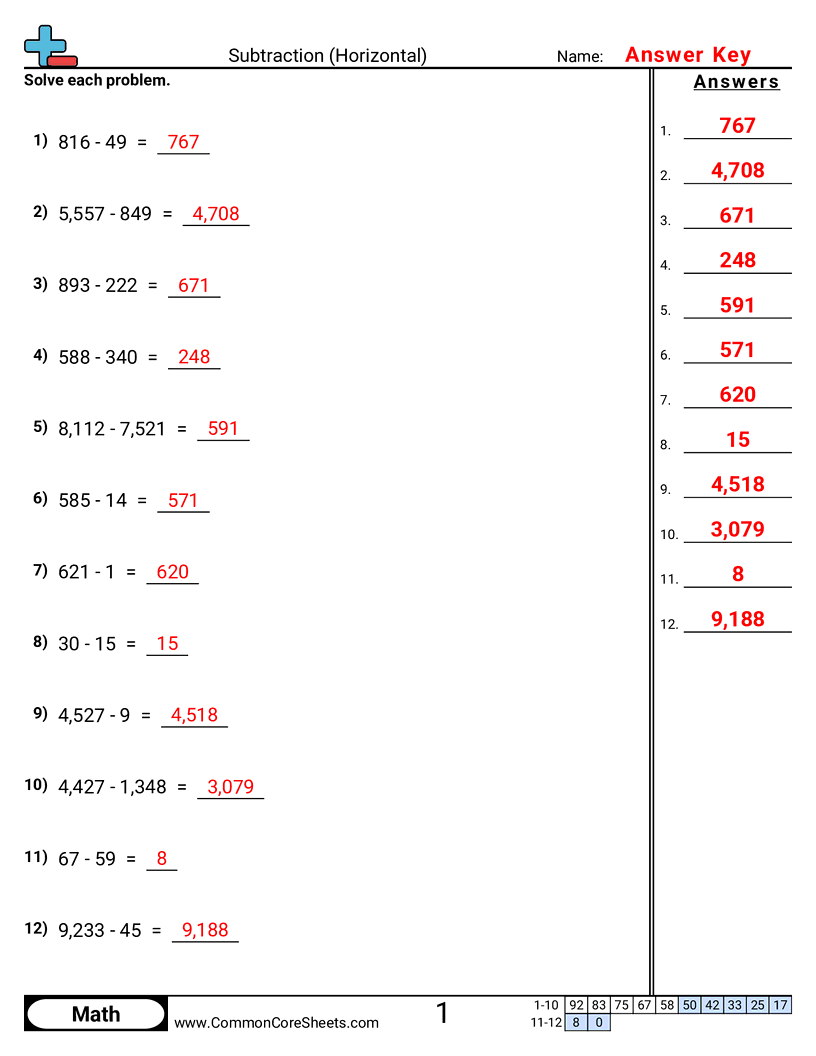
Subtract two-digit numbers to find how much is left or how much less. Use tens and ones place value to subtract more accurately. Decide when you need to borrow (regroup) to subtract from a smaller ones digit. Read and solve subtraction equations written in a single line.
2nbt5
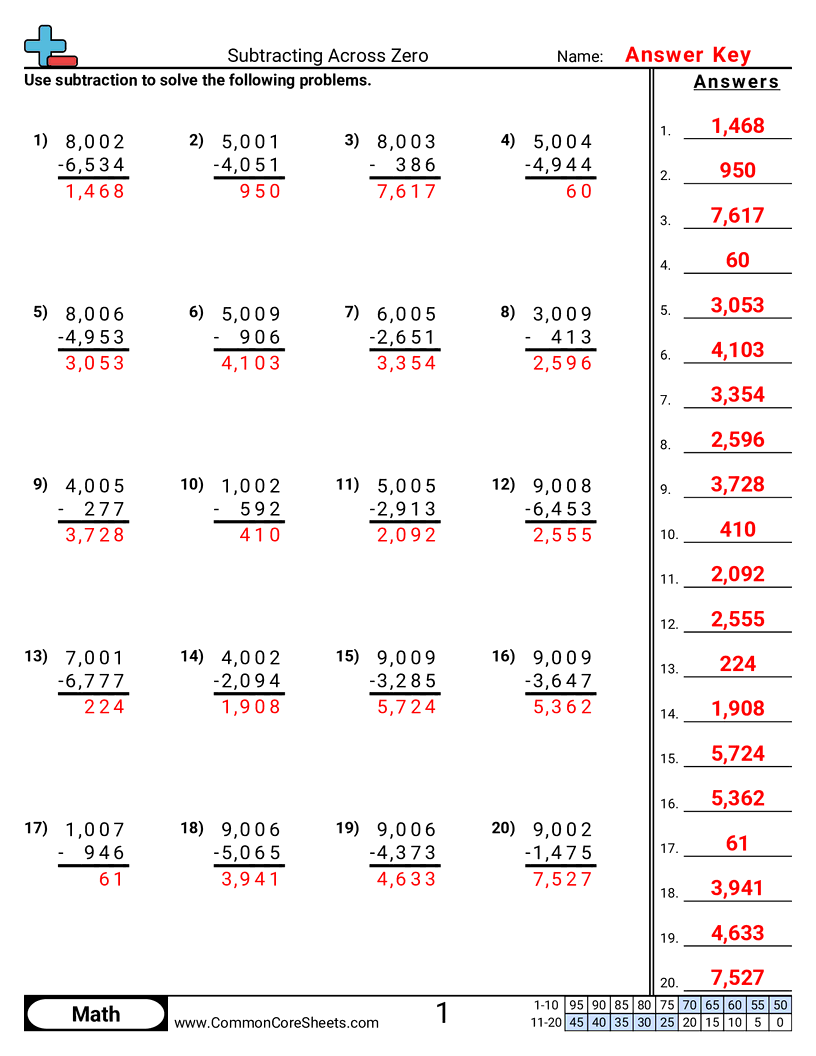
Subtract two- and three-digit numbers when the top number has a zero in the middle. Use borrowing (regrouping) to subtract across a zero without getting stuck. Keep digits lined up by hundreds, tens, and ones when subtracting.
3nbt2
Subtract larger numbers where the top number has zeros in it. Use regrouping to subtract when you need to borrow across a zero. Line up digits by place value so each column is subtracted correctly.
4nbt4
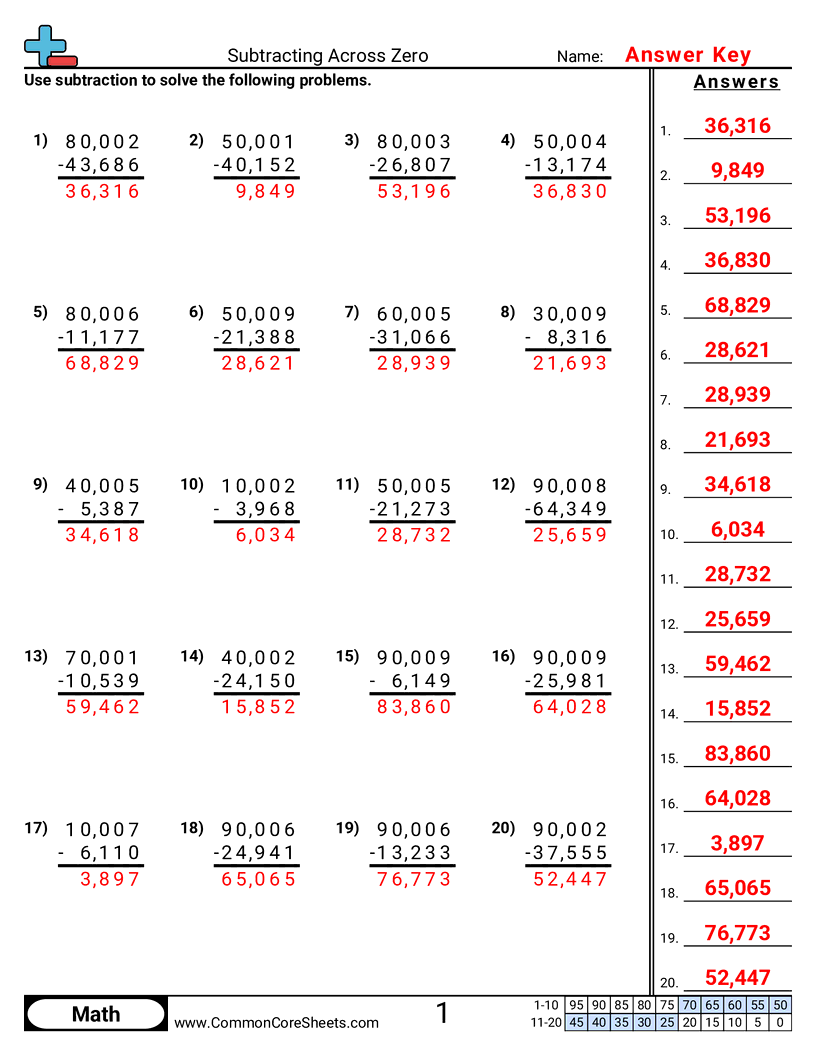
Subtract multi-digit numbers when you have to borrow across several zeros. Use regrouping to turn a zero in the top number into a number you can subtract from.
4nbt4
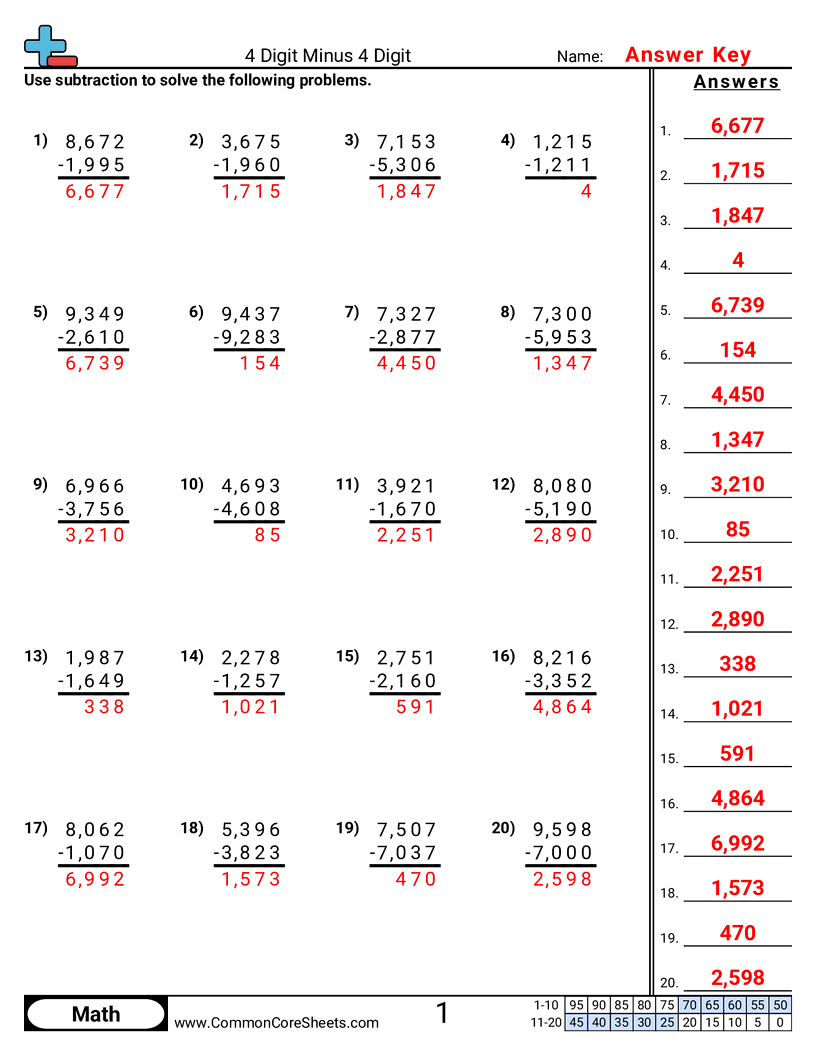
Subtract one 4-digit number from another accurately. Line up thousands, hundreds, tens, and ones so each digit is subtracted in the right place. Use borrowing (regrouping) when the top digit is smaller than the bottom digit in a place.
2nbt7
Subtract one 3-digit number from another to find the difference. Line up hundreds, tens, and ones correctly before subtracting. Use borrowing (regrouping) when the top digit is smaller than the bottom digit in a place. Subtract accurately across zeros when borrowing is needed.
Subtract multi-digit numbers using borrowing when you need to trade from a higher place value. Handle subtraction problems where you have to regroup more than once in the same problem.
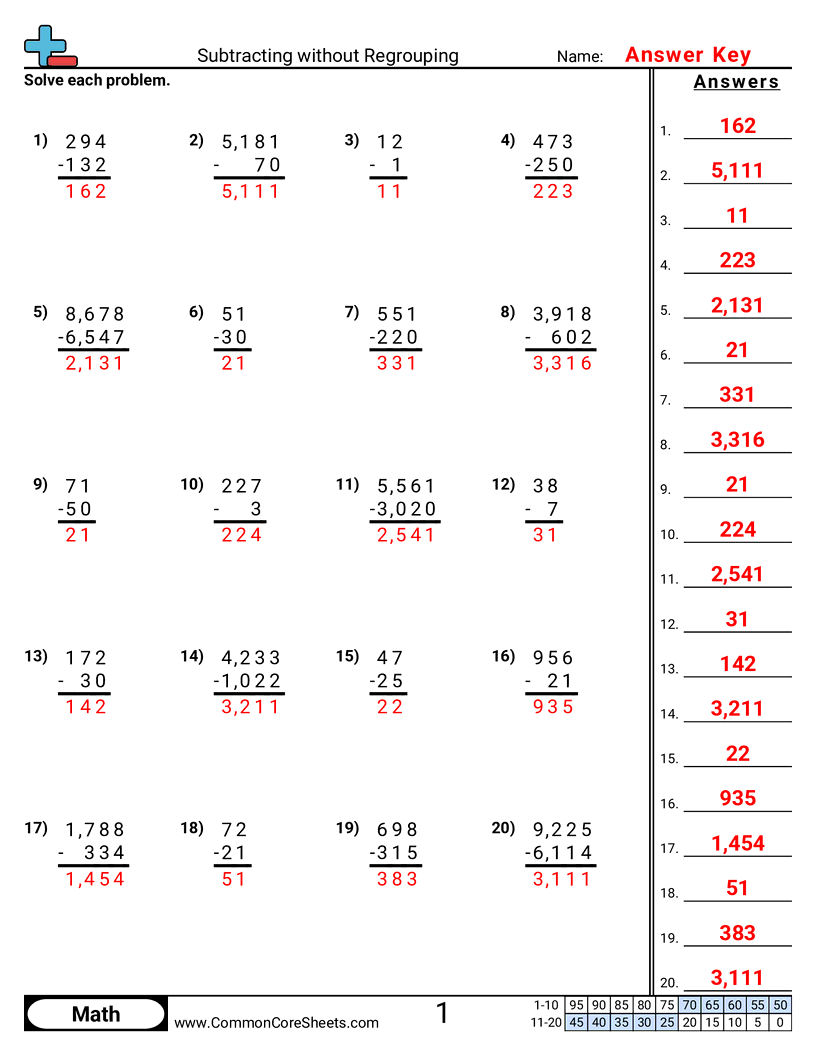
Subtract two numbers when each top digit is big enough so you don’t need to borrow. Line up ones and tens correctly before subtracting. Subtract in vertical form, working from the ones place to the tens place.
Subtract numbers written in columns by lining up ones, tens, and hundreds correctly. Use borrowing (regrouping) when the top digit is smaller than the bottom digit in a place value.
Subtract one number from another to find how much is left or how much smaller it is. Use borrowing (regrouping) when the top digit is smaller than the bottom digit in a place.
Subtract one number from another to find how much is left or how much smaller it is. Use borrowing (regrouping) when the top digit is smaller than the bottom digit in a place.
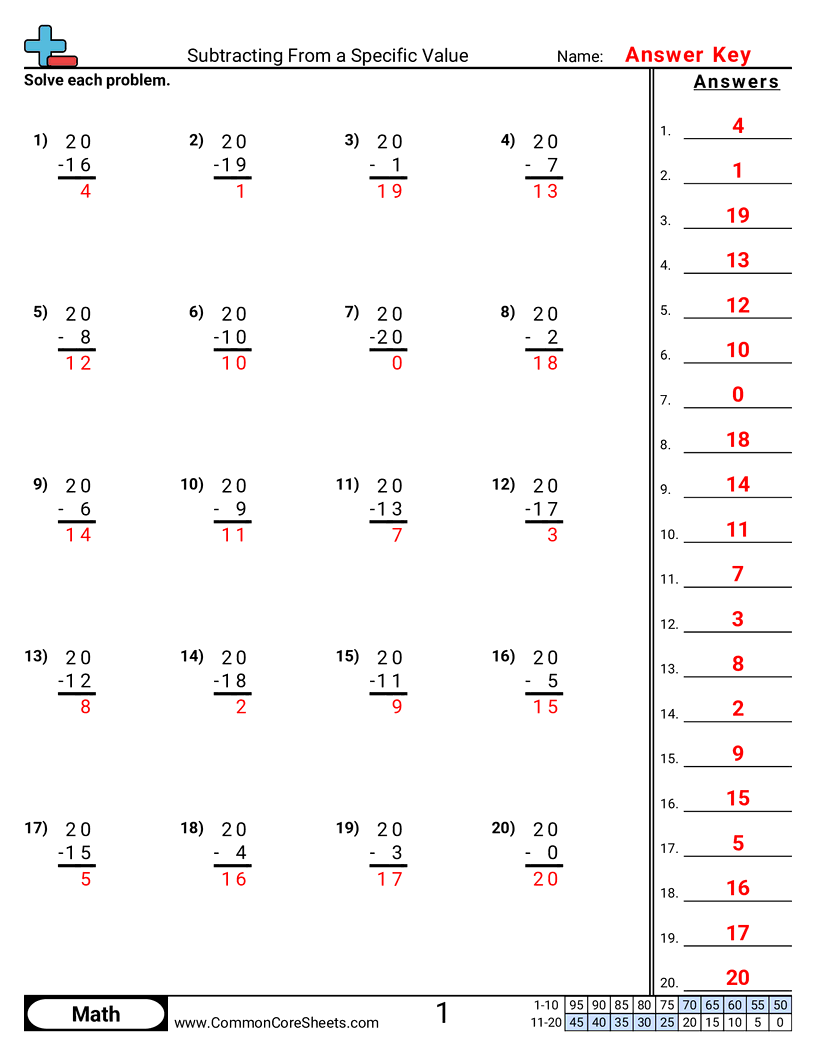
Practice subtracting different numbers from the same starting number. Get faster and more accurate with basic subtraction facts and mental math.
2nbt7 3nbt2
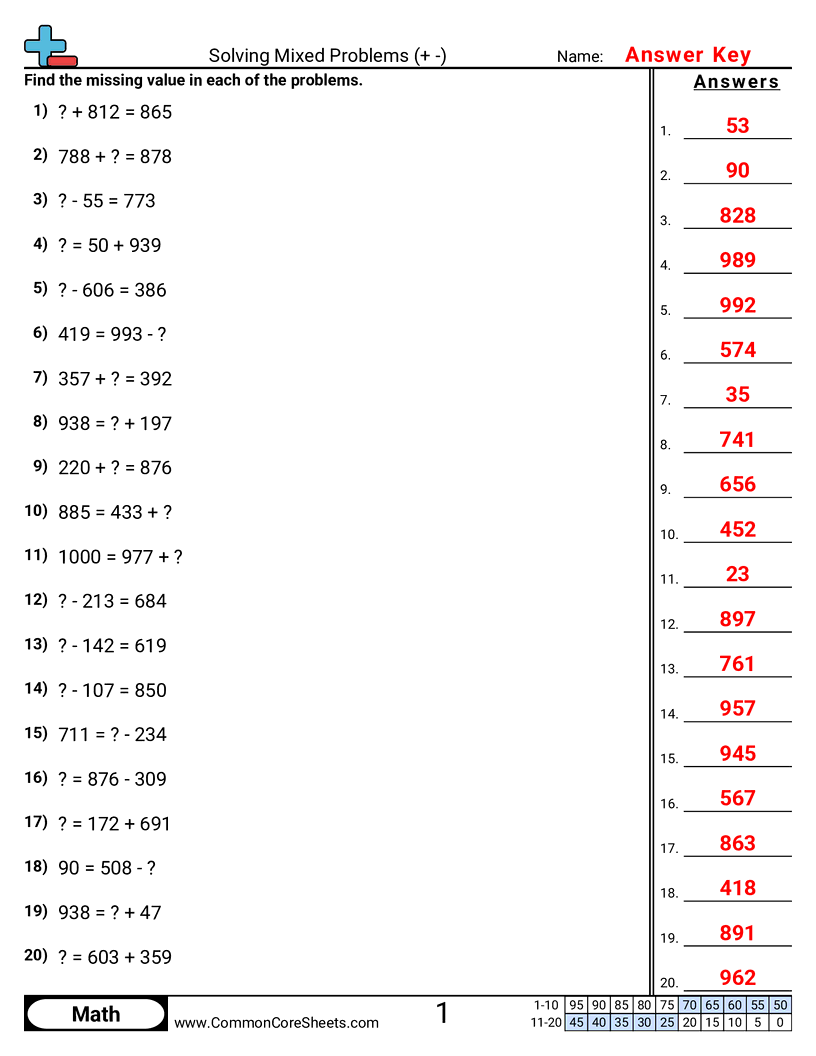
Practice adding and subtracting numbers up to 1,000 accurately. Decide whether to add or subtract based on the symbols in the problem. Use regrouping when needed to solve multi-digit addition and subtraction. Keep digits lined up by place value so the answer makes sense. Practice finding a missing number in addition and subtraction equations Get comfortable seeing the unknown in different spots — at the beginning, middle, or end of an equation
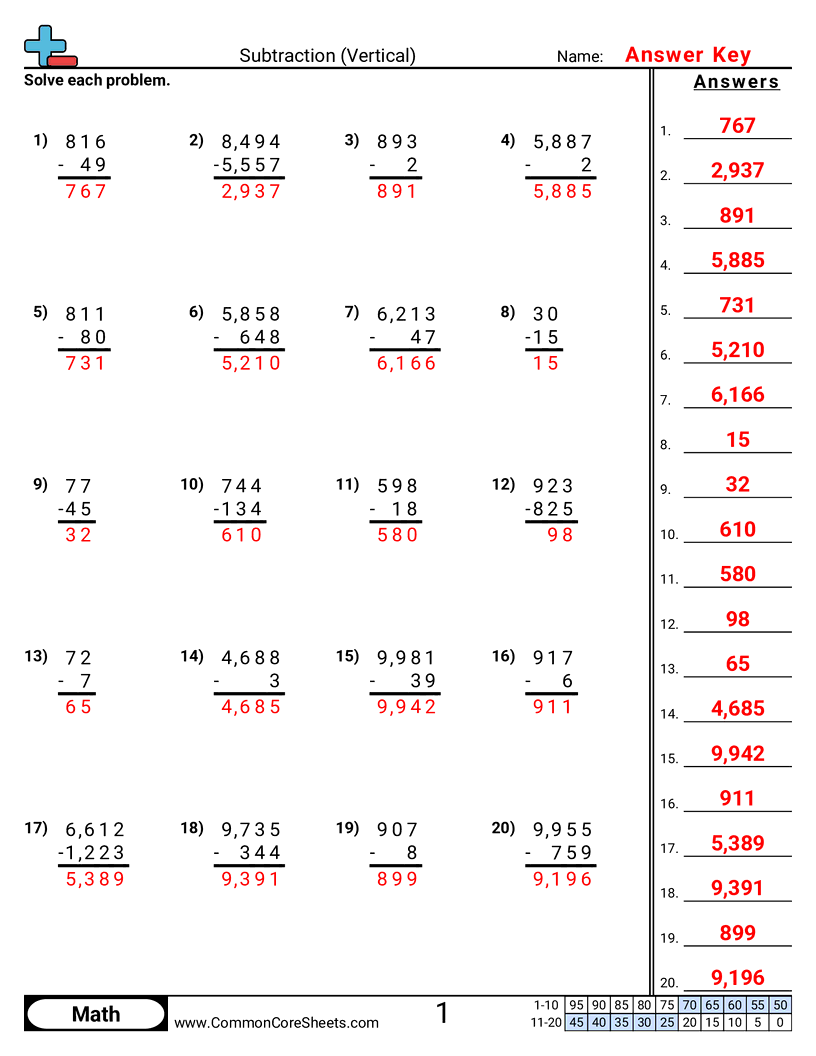
Subtract one number from another using stacked (vertical) subtraction. Line up ones and tens so you subtract the correct place values. Use borrowing (regrouping) when the top digit is smaller than the bottom digit.
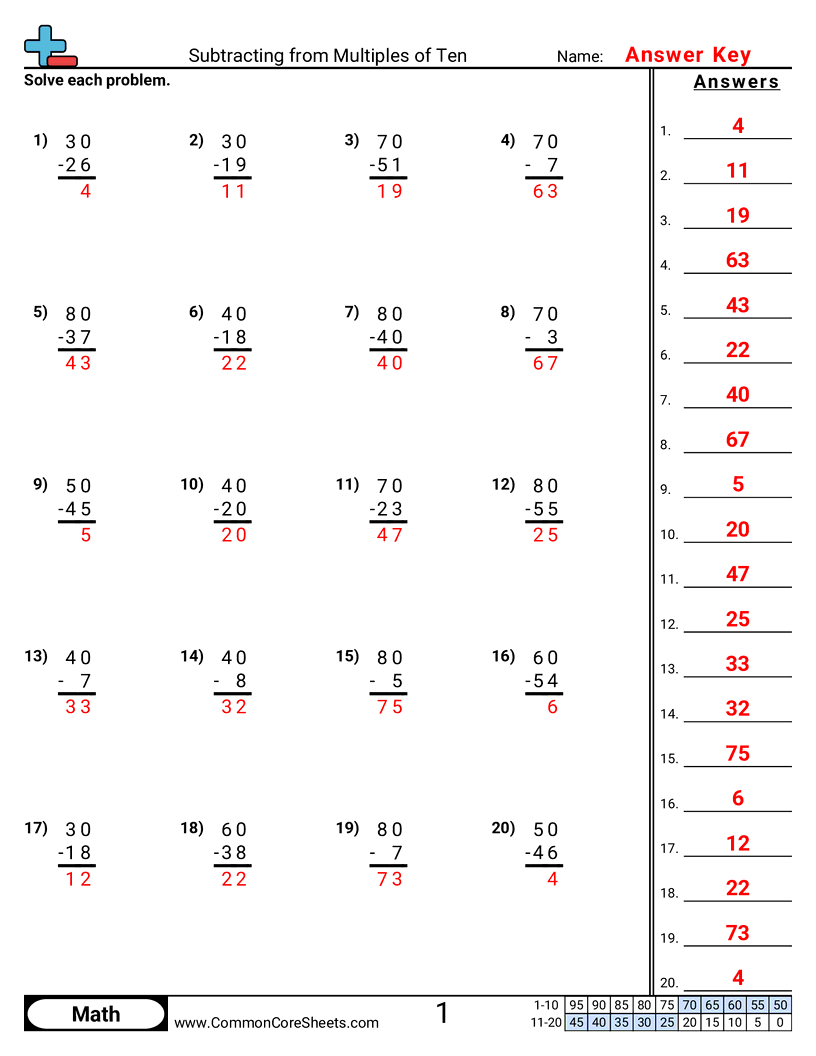
Subtract a one- or two-digit number from a multiple of ten. Use place value to keep tens and ones lined up while subtracting. Regroup a ten into ones when the ones digit is too small to subtract.
Playwire Advertisement