×Description:
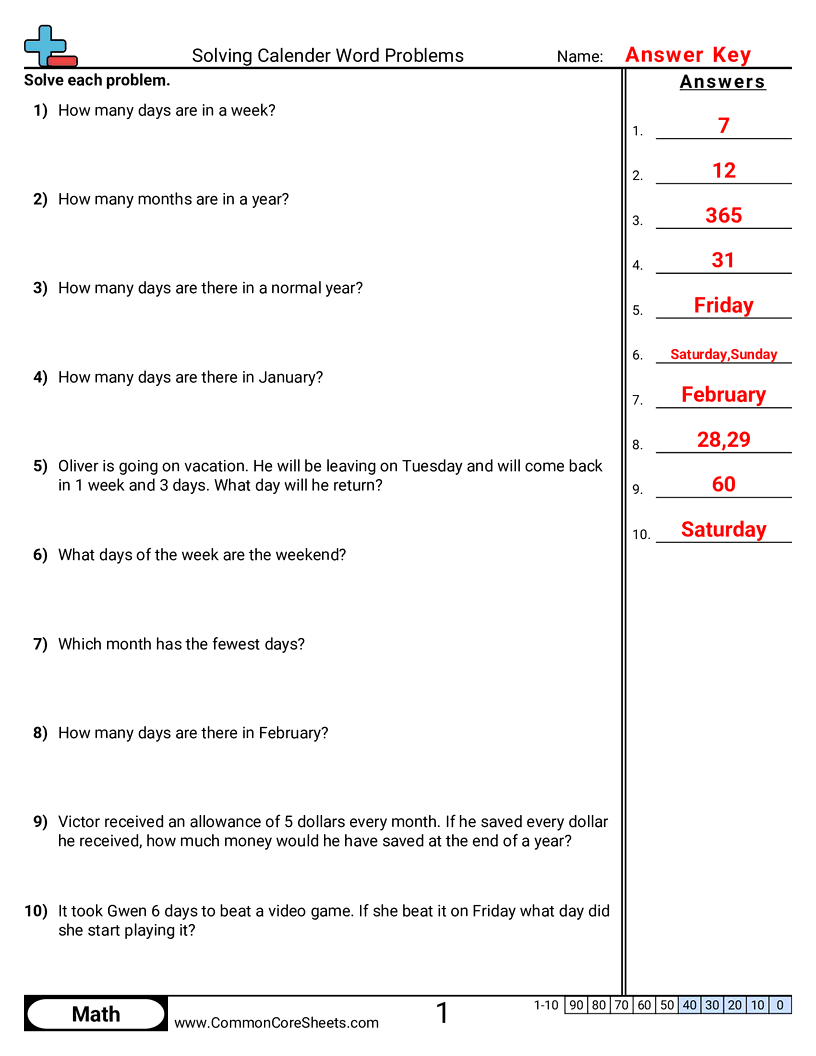
"This worksheet is designed to enhance children's math skills through 10 engaging calendar word problems. Concepts covered include calculating timelines, understanding weekly and monthly cycles, and identifying specific days. Perfect for customization and conversion to flashcards, it's also well-suited for distance learning settings, offering an interactive way to bolster numerical acumen and calendar comprehension."
×Student Goals: Basic Calendar ComprehensionAfter completing this worksheet, students should have a solid understanding of the structure and function of a calendar. They should be able to identify the days of the week, the number of days in each month, and the total number of days in a year. This comprehension serves as a foundational skill in their academic journey, aiding future tasks related to planning, organization, and time management.Time Calculation ProficiencyStudents will accomplish the ability to calculate the passage of time in different scenarios. They must grasp the concept of durations such as weeks, months, and years, and effectively apply these to real-world contexts. Whether it is determining the amount of money saved over a period, estimating the return date from a vacation, or calculating game completion times, students will develop a practical skill set for time calculation.Application of Mathematical ConceptsThis worksheet will aid students in applying their knowledge of addition and multiplication indirectly through word problems. The skill to visualize and execute mathematical operations using text-based problems is crucial for their problem-solving capabilities in the future. Relating dollar amounts to periods or deducing start and end days integrates math problems into daily life scenarios.Problem-Solving SkillsUpon completing this worksheet, students should have honed their ability to solve word problems. By translating real-life examples into numerical data and using their knowledge of calendars, they can find solutions to practical problems. This fosters their logical thinking, reading comprehension, and analytical thought process, which are integral for their overall scholastic and future career success.Calendar ReadingStudents should be confident in reading a calendar accurately upon completion of the worksheet. They should be able to navigate around months, weeks, and days and further identify special cases such as leap years or the unique case of February. By mastering these elements, students will have developed the proficiency to plan and manage their time better both in academia and in their daily lives.